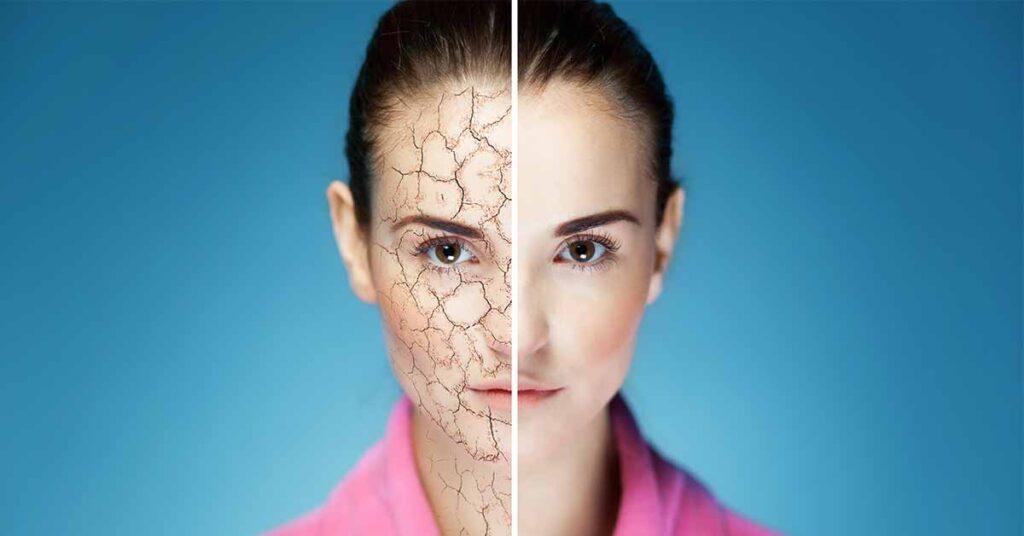
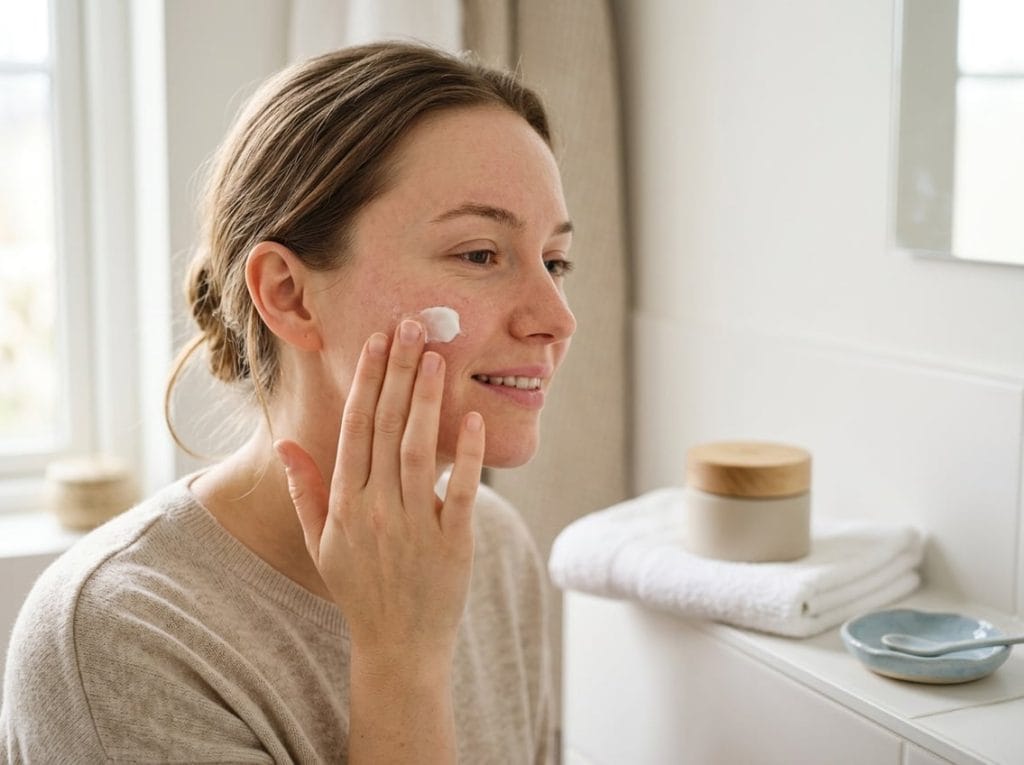
Facial eczema causes dry patches, redness, and itching that can make your skin feel tight and uncomfortable. A gentle daily routine built around a mild cleanser, a fragrance-free moisturizer, and simple product choices can help protect your skin barrier and reduce flare-ups over time. Your face has thinner skin than the rest of your body, so it reacts more easily to harsh products, weather changes, and stress.
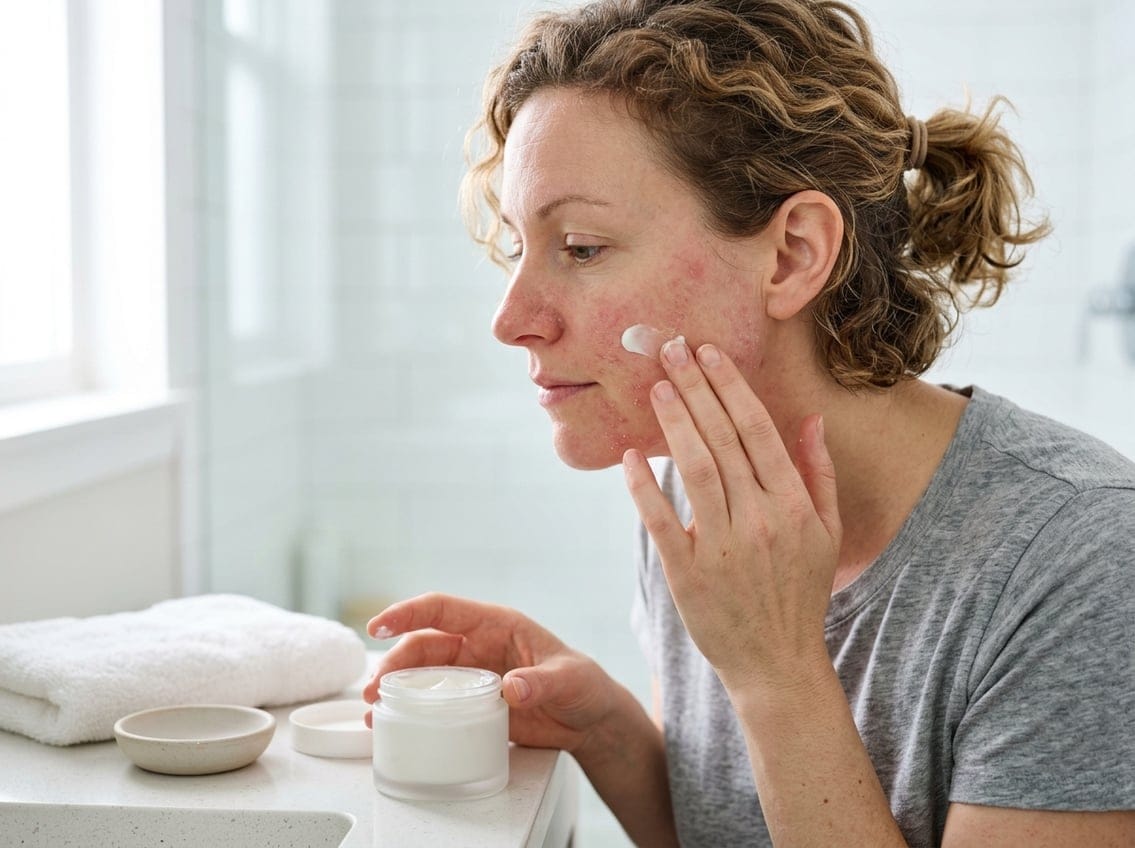
You do not need a complicated routine to manage eczema-prone skin. Small changes, like choosing the right face cream and avoiding common triggers, can make a real difference in how your skin looks and feels. Knowing what to use, what to avoid, and when a flare-up needs more attention gives you a clear plan to follow.
This guide walks you through building a routine that supports your skin, from daily care to soothing active flare-ups. You will also learn which ingredients to avoid, how to adjust your routine for makeup and weather, and when it is time to see a doctor.
Key Takeaways
- Facial eczema needs a gentle, consistent routine to protect the skin barrier.
- The right face cream and ingredient choices can reduce irritation and flare-ups.
- Some cases require medical care, so knowing the signs helps you get the right treatment.
Recognizing Facial Eczema and Its Common Forms
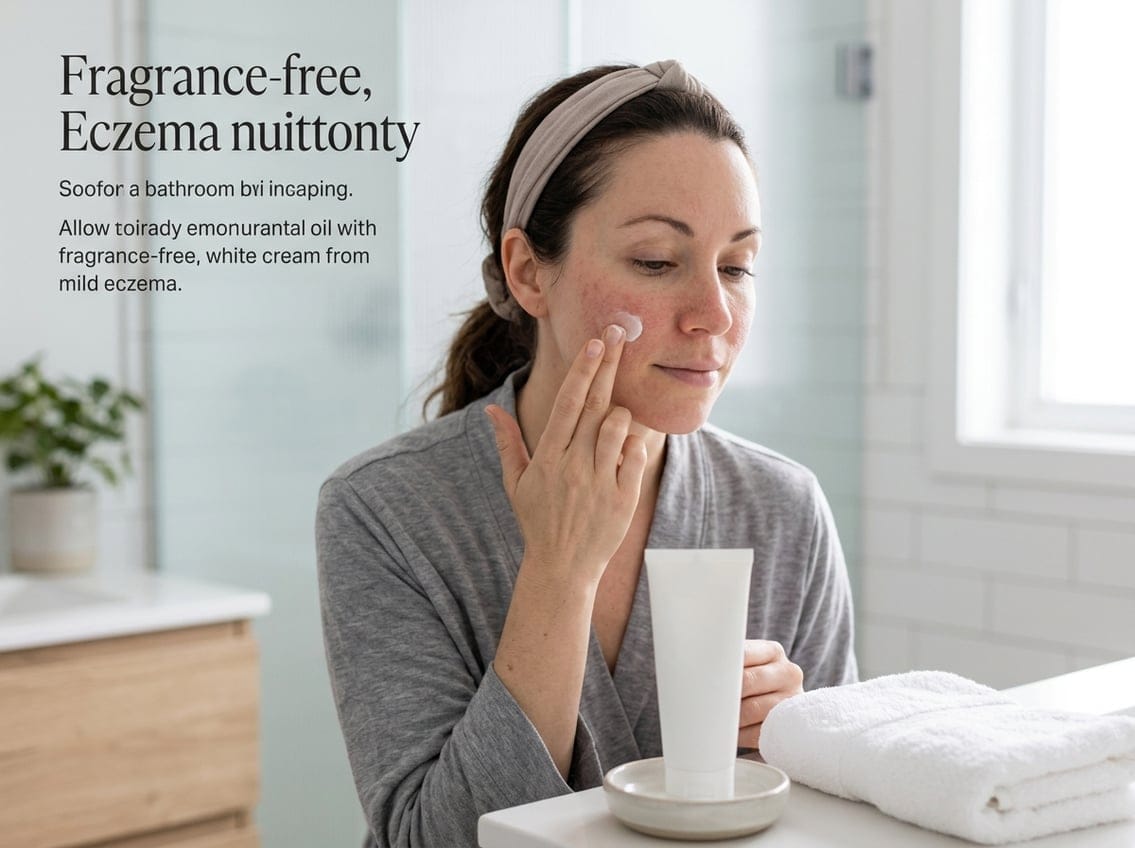
Facial eczema shows up in different ways depending on where it appears and what type of dermatitis you have. Knowing the specific signs on your face helps you tell it apart from ordinary dry skin, so you can choose the right treatment.
Typical Symptoms on the Cheeks, Eyelids, and Around the Mouth
Your cheeks are one of the most common spots for facial eczema. You may notice redness, dry patches, and scaly skin that feels rough to the touch.
Eyelids often react differently. The skin there is thin, so swelling, itching, and flaking can happen fast, sometimes making your eyes feel tight or sore.
Around your mouth, eczema can cause cracking, especially at the corners. This area is prone to irritation from saliva, food, and lip products, which can make dryness and skin discoloration on your chin, cheeks, and forehead worse.
In some cases, you might see small blisters that ooze or crust over during a flare-up.
Atopic Dermatitis, Seborrheic Dermatitis, and Contact Eczema
Facial eczema isn’t one single condition. It includes several types of dermatitis, each with its own pattern:
- Atopic dermatitis: Often linked to allergies or asthma. Causes itching, dry patches, and sensitivity around the eyes, cheeks, and mouth.
- Seborrheic dermatitis: Shows up in oily areas like the scalp line, eyebrows, and sides of the nose. Causes greasy, yellowish scales.
- Contact eczema: Triggered by an irritant or allergen touching your skin, such as a skincare product or metal. Causes redness, swelling, and sometimes blisters right where contact happened.
Your dermatologist can help you figure out which of the five types of eczema on the face you’re dealing with, since treatment can vary based on the cause.
How Facial Eczema Differs From Dry Skin
Dry skin and facial eczema can look similar at first, but they aren’t the same thing. Dry skin usually feels tight and rough, without much redness or swelling.
Facial eczema goes further. It often includes itching that disrupts your day, visible inflammation, and patches that may crack, ooze, or crust over during a flare-up.
Another key difference is how your skin responds to moisturizer. Dry skin typically improves with regular use of a basic cream. Eczema, on the other hand, may need targeted care to soothe eczema-prone skin and calm inflammation, not just add moisture.
If redness, swelling, or itching keeps coming back in the same spots, it’s likely more than simple dryness.
Build a Simple Daily Routine That Protects the Skin Barrier
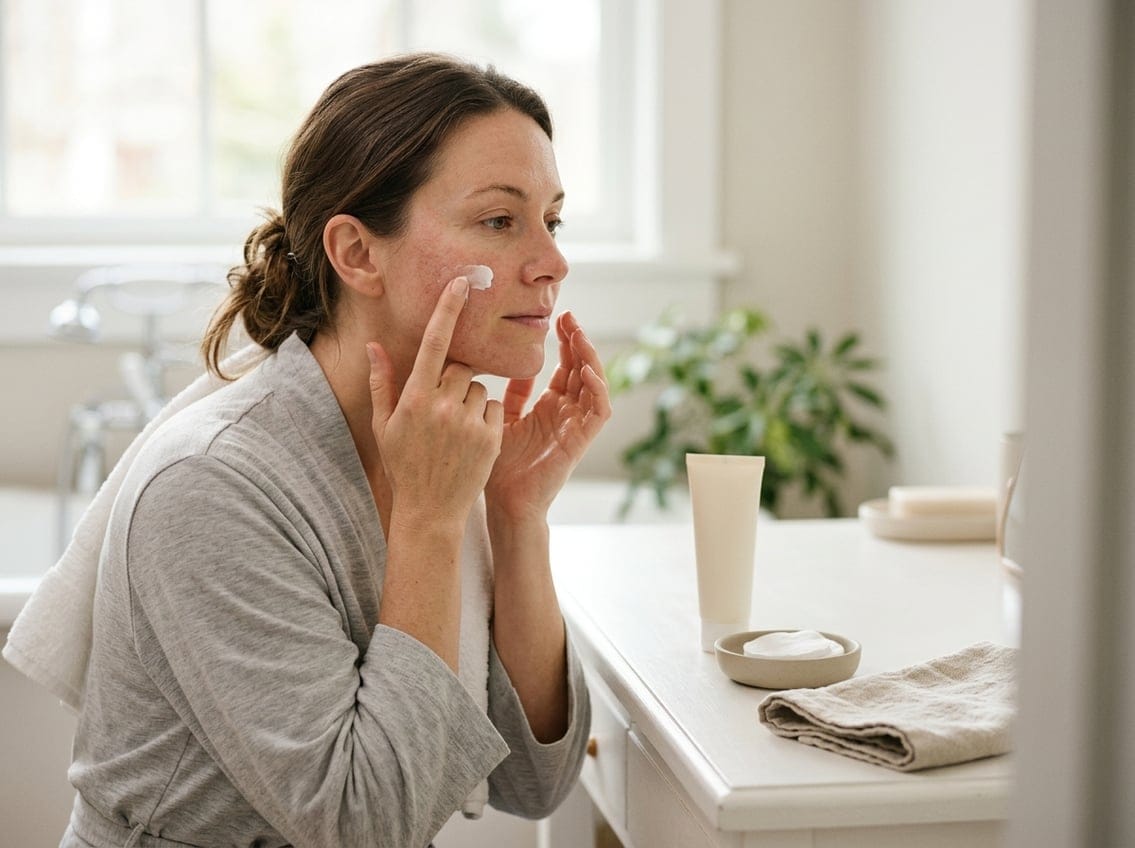
Facial eczema skin care works best when you keep it simple and consistent. A short daily routine focused on gentle cleansing, quick moisturizing, and light daytime protection can help your skin barrier stay strong and reduce flare-ups over time.
Cleanse Gently With Lukewarm Water
Your skin barrier is easily disrupted by harsh cleansing habits. Use lukewarm water instead of hot water, since hot water strips natural oils and leaves sensitive skin feeling tight and dry.
Choose a mild, fragrance-free cleanser made for sensitive skin. Avoid scrubbing your face or using rough washcloths, since friction can trigger irritation.
Keep your cleansing time short. A gentle face eczema cleanser routine should take less than a minute and should never leave your skin feeling squeaky clean. That tight feeling usually means your barrier has lost too much oil.
Pat your skin dry with a soft towel afterward. Don’t rub, since this can worsen redness and irritation on already sensitive skin.
Moisturize Within Minutes of Washing
Timing matters just as much as the product you choose. Apply moisturizer within a few minutes of washing your face, while your skin is still slightly damp.
This step helps trap water in your skin before it evaporates. Look for a moisturizer labeled as an emollient, since emollients fill gaps between skin cells and help repair the skin barrier.
Creams and ointments tend to work better than lotions for eczema-prone skin. They contain more oil, which forms a stronger barrier against moisture loss. Ointments are especially useful for thicker, drier patches, while creams work well for general daily barrier repair.
Apply a thin, even layer rather than rubbing moisturizer in aggressively. Reapply if your skin feels dry later in the day.
Use Daytime Protection Without Overloading Skin
Daytime protection means shielding your skin without adding too many products. Too many layers can overwhelm sensitive skin and trigger new irritation.
Sunscreen is a key part of daily protection. Choose a mineral sunscreen with zinc oxide or titanium dioxide, since these tend to be gentler than chemical sunscreens for eczema-prone skin.
Apply sunscreen after your moisturizer has absorbed. Wait a few minutes between steps so each product can settle before the next.
Avoid adding extra treatments like exfoliants or active ingredients during the day. Stick to a short list of trusted skin care products, and give your skin time to adjust before introducing anything new.
Choose a Gentle Face Cream for Dry, Reactive Skin
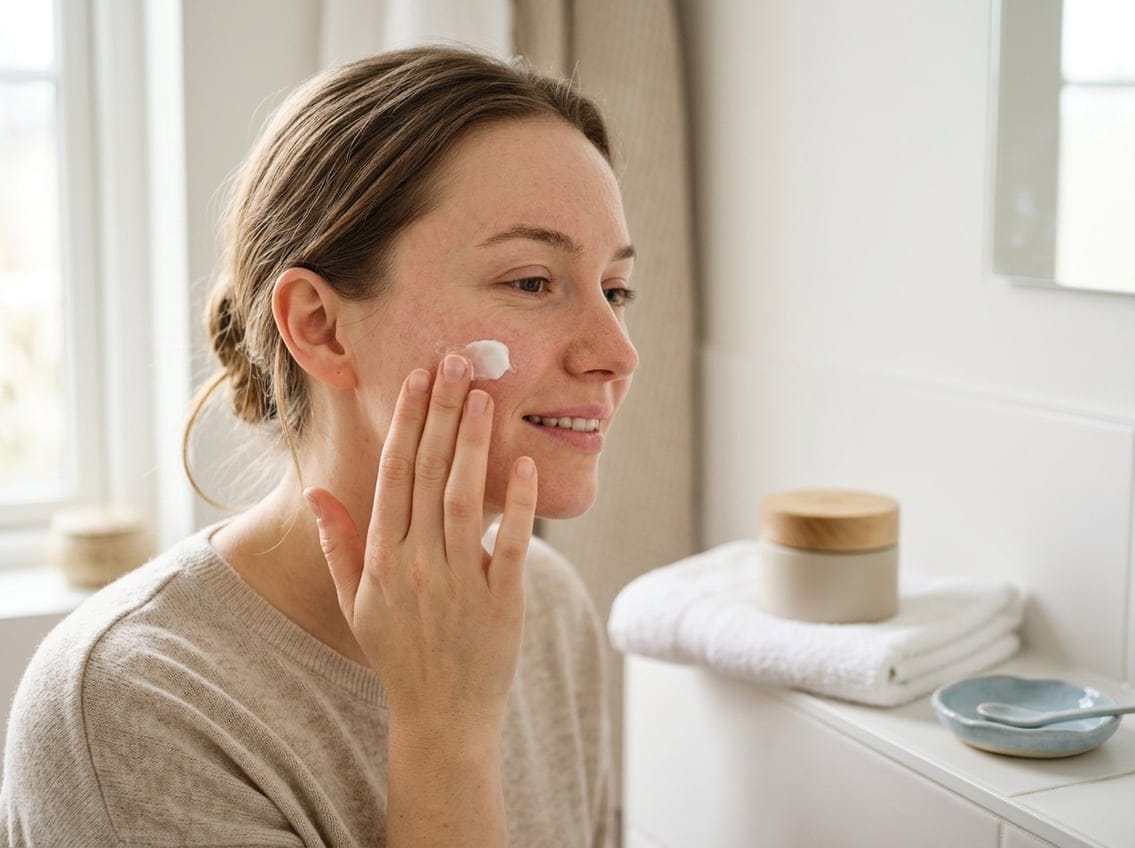
Your skin needs the right texture, ingredients, and formula to calm eczema without causing more irritation. The goal is simple: find a product that repairs your skin barrier while feeling comfortable enough to use every day.
Why Creams and Ointments Often Outperform Lotions
Lotions have a higher water content, which means they evaporate faster and leave less protection behind. A thick cream or ointment sits on your skin longer and creates a stronger barrier against moisture loss.
This matters most during a flare-up, when your skin barrier is already weak. Ointments made with petrolatum or petroleum jelly are especially effective because they seal in water without adding fragrance or extra ingredients that might sting.
Many dermatologists point to thicker formulas as more effective for eczema-prone skin than standard lotions. If your skin feels tight or itchy shortly after applying a product, it may be too light for your needs.
Switching to a heavier eczema cream can reduce how often you need to reapply throughout the day.
Helpful Barrier-Supporting Ingredients to Look For
Not all moisturizing ingredients work the same way. Some attract water to your skin, while others form a protective seal on top.
Humectants like glycerin, hyaluronic acid, and urea pull moisture into your skin. Emollients such as ceramides, squalane, and shea butter fill gaps in your skin barrier and smooth rough patches.
Occlusives like petrolatum sit on top of your skin to lock everything in. Many effective formulas combine all three types, since ceramides paired with humectants and occlusives support long-term barrier repair.
Niacinamide and zinc are worth checking for too. Both ingredients help calm redness and support your skin’s natural defenses without feeling greasy.
Avoid products with alcohol, fragrance, or essential oils, since these commonly trigger reactions in eczema-prone skin.
Selecting a Texture That Works Under Makeup and Sunscreen
If you wear makeup or sunscreen daily, texture becomes just as important as ingredients. A cream that feels too heavy can pill under makeup or leave a greasy residue.
Look for a gentle face cream that absorbs within a few minutes but still leaves a slight protective layer. This balance allows sunscreen and makeup to glide on smoothly instead of sliding off.
Some brands make lighter versions of their eczema cream for daytime use, saving thicker ointments for nighttime repair. This kind of routine, switching between richer and lighter textures depending on the time of day, helps you stay protected without disrupting your makeup routine.
Testing a small amount on your jawline first can help you confirm it works well under your usual products before applying it to your whole face.
Soothe an Active Flare Without Further Irritation
During an eczema flare, your skin needs less product and more protection. Stopping certain steps, cooling the skin, and controlling the urge to scratch can all support eczema relief while your skin barrier recovers.
Pause Potentially Irritating Actives and Cosmetics
Stop using retinoids, retinol, and exfoliating acids the moment you notice redness or itching. These ingredients speed up cell turnover, but on inflamed skin they strip away protection your skin needs to heal.
Skip makeup on active flares if possible. Foundation, concealer, and powder can trap heat and irritants against the skin, which often worsens itching.
If you must wear makeup, choose mineral-based products and remove them gently with a fragrance-free cleanser. Avoid any product with alcohol, fragrance, or essential oils during this time.
Read labels carefully. Common irritants hide in products marketed as “natural” or “sensitive skin” even when they contain fragrance or preservatives that trigger eczema flares.
Use Cool Compresses and Protective Moisturizers
A cool compress applied for 10 to 15 minutes can calm redness and reduce the urge to scratch. Use a clean, damp cloth and avoid ice directly on skin, since extreme cold can irritate already sensitive areas.
After the compress, apply a thick moisturizer while skin is still slightly damp. Look for ceramide-rich face creams recommended by dermatologists to lock in hydration.
Ointments with petrolatum work well during flares because they form a protective seal without added ingredients that might sting. Colloidal oatmeal is another option that reduces itching and calms irritation on contact.
Apply moisturizer at least twice daily, and more often if skin feels tight or dry.
Break the Itch-Scratch Cycle
Scratching damages skin and often makes eczema flares worse. This creates a loop known as the itch-scratch cycle, where irritation leads to scratching, and scratching leads to more irritation.
Keep fingernails short and consider wearing soft cotton gloves at night to limit unconscious scratching during sleep. Cool compresses, discussed above, can interrupt this cycle by numbing the itch signal temporarily.
Try patting instead of rubbing when skin feels itchy. If you need a fast option, dermatologist-approved eczema relief creams can calm symptoms without added fragrance or harsh preservatives.
Consistent, gentle care during a flare gives your skin the best chance to recover without added damage.
Avoid Ingredients and Exposures That Commonly Trigger Reactions
Certain ingredients and everyday exposures can trigger eczema flare-ups on your face. Knowing what to avoid helps you protect your skin barrier and reduce irritation before it starts.
Fragrance, Essential Oils, and Harsh Cleansing Agents
Fragrance is one of the most common triggers for eczema flare-ups. This includes both synthetic fragrances and “natural” scents added to products.
Essential oils cause problems too. Tea tree oil is often marketed as gentle, but it can still irritate sensitive skin and trigger a reaction.
Harsh cleansing agents strip your skin’s natural oils. Cocamidopropyl betaine, a foaming agent in many cleansers, is a known irritant for some people with eczema.
Check labels for these ingredients:
- Fragrance or parfum
- Essential oils (including tea tree oil)
- Sulfates
- Cocamidopropyl betaine
Choose fragrance-free, non-foaming cleansers instead.
Potential Contact Allergens in Cosmetics and Personal Care
Your cosmetics and personal care products may contain allergens that cause contact eczema. Lanolin, found in many moisturizers, is a common culprit even though it’s meant to soften skin.
Propylene glycol appears in lotions and creams as a moisture-binding ingredient. It can irritate skin that’s already compromised by eczema.
Ethanol, used as a preservative or solvent in some products, can dry out and irritate your skin further.
Metal allergens matter too. Nickel in jewelry, zippers, or metal applicators can trigger a reaction if it touches your face or nearby skin.
Read ingredient lists carefully. Patch test new products on a small area before applying them to your whole face.
Weather, Fabrics, and Household Irritants
Environmental triggers affect your skin daily, whether you notice them or not. Cold, dry weather pulls moisture from your skin and can worsen eczema symptoms.
Wool fabric is rough and can rub against your face, causing irritation. Choose soft, breathable materials like cotton instead when possible.
Smoke, whether from cigarettes or wood fires, contains particles that irritate sensitive skin. Household chemicals matter too. Bleach and other cleaning products release fumes that can trigger flare-ups if you’re exposed to them regularly.
Common household and environmental irritants include:
- Bleach and strong cleaning chemicals
- Cigarette or wood smoke
- Wool clothing or blankets
- Extreme cold or dry air
Limit your exposure to these triggers when you can to help keep your skin calm.
Adapt Your Routine for Makeup, Weather, and Stress
Makeup, changing weather, and daily stress can all affect your skin barrier and set off new eczema flare-ups. Small adjustments to when and how you use products, plus a few environmental changes at home, can help you avoid irritation without giving up your normal routine.
Applying Makeup More Safely During Calm Periods
Wait until your skin is calm and flare-free before applying makeup. Fresh flare-ups mean broken skin, and adding products on top can make irritation worse.
When your skin looks clear, choose mineral-based, fragrance-free makeup made for sensitive skin. Always patch test a new product on your inner arm first. Wait 24 hours to check for redness or itching before using it on your face.
Apply a gentle moisturizer and sunscreen before makeup, not after. This creates a barrier between your skin and the product. Remove makeup at night with a mild, fragrance-free cleanser. Rubbing or scrubbing can damage your skin barrier further, so pat gently instead.
Managing Cold, Dry Air and Indoor Humidity
Cold outdoor air and dry indoor heat both pull moisture from your skin. This makes dry skin and cracking more likely during winter months.
A humidifier in your bedroom can add moisture back into the air while you sleep. Keep indoor humidity between 40% and 50% if possible. This range helps skin hold onto water without encouraging mold growth.
Outside, cover your face with a soft scarf during cold, windy weather. Apply a thick, fragrance-free cream before heading out to add a protective layer. Indoors, avoid sitting directly in front of heating vents, since blowing hot air dries skin quickly. Reapply moisturizer during the day if your skin feels tight or rough.
Tracking Personal Triggers to Reduce Repeat Flares
Eczema triggers differ from person to person. Keeping a simple log helps you spot patterns in your environmental triggers and daily habits.
Write down flare-ups along with what happened before them. Common items to track include:
- Stress levels or major life events
- Sweat after exercise
- New skincare or laundry products
- Weather changes
- Certain foods
Stress causes the body to release chemicals that can weaken your skin barrier and make itching worse. If you notice flares after stressful days, try short breaks, deep breathing, or a walk outside. Over a few weeks, your log should show clear patterns. Share this information with your dermatologist so they can help you adjust your skincare routine based on your specific triggers.
Know When Medical Evaluation and Prescription Treatment Are Needed
Home care and gentle products help with mild eczema, but some symptoms mean you need a doctor’s help. Knowing the warning signs and treatment options can help you get relief faster and avoid complications.
Signs That Require Prompt Dermatology Care
Most eczema flare-ups respond to moisturizers and lifestyle changes. But certain symptoms mean you should call a doctor right away.
Watch for these warning signs:
- Swelling that spreads or feels warm to the touch
- Blisters filled with fluid or pus
- Skin that oozes yellow crust
- Fever along with a skin rash
- Pain that gets worse instead of better
- A flare-up that doesn’t improve after two weeks of home care
These signs can point to an infection or a severe eczema flare-up that needs prescription treatment. Waiting too long can make the problem harder to treat. If you notice any of these signs, schedule an appointment as soon as you can.
How Topical Corticosteroids and Calcineurin Inhibitors May Help
When over-the-counter creams aren’t enough, your doctor may prescribe stronger medicine. Two common options are topical corticosteroids and calcineurin inhibitors.
Topical corticosteroids reduce inflammation and calm itching. They come in different strengths, and your doctor will choose one based on how severe your symptoms are. Facial skin is thin, so doctors often prescribe milder versions for use on the face.
Calcineurin inhibitors work differently. They lower immune system activity in the skin without the side effects linked to long-term steroid use. This makes them a good choice for sensitive areas like the face and eyelids.
Both treatments target atopic dermatitis symptoms directly. They are not meant for daily long-term use unless your doctor says otherwise. Follow the prescribed schedule closely to avoid skin thinning or other issues.
Working With a Board-Certified Dermatologist
A board-certified dermatologist has the training to diagnose your skin condition correctly. This matters because other skin problems can look like eczema but need different treatment.
During your visit, the dermatologist will:
- Examine your skin and ask about your symptoms
- Review your medical history and any triggers you’ve noticed
- Recommend a treatment plan based on your specific needs
- Adjust your eczema treatment if the first option doesn’t work
Your dermatologist may also suggest patch testing to find out if allergies are making your symptoms worse. They can prescribe stronger medications when needed and monitor you for side effects. The National Eczema Association notes that working closely with a doctor often leads to better long-term control of symptoms. Regular follow-up visits help make sure your treatment plan still fits your skin’s needs.
Frequently Asked Questions
Your face needs extra care when you have eczema because facial skin is thinner and more sensitive than skin on the rest of your body. Below are answers to common questions about products, routines, and when to get professional help.
What is the best face cream for eczema flare-ups?
Look for a fragrance-free cream or ointment with ceramides. Ceramides help restore your skin’s natural barrier, which is often weaker in people with eczema.
Brands like CeraVe, Eucerin, and Cetaphil Eczema tend to work well and cost less than many beauty store options, according to dermatologist-recommended eczema products. Creams with colloidal oatmeal can also calm redness and irritation on the face.
Avoid lotions if you can. They contain more water and less oil, so they don’t lock in moisture as well as creams or ointments.
What should I apply to an eczema flare-up on my face?
Start with a cold compress if your skin feels hot or inflamed. This can reduce swelling and calm irritation right away.
Follow with a gentle, cooling cream. Products containing colloidal oatmeal are shown to relieve itching and irritation on the face, body, and hands.
If your flare-up doesn’t improve or gets worse, talk to your dermatologist. You may need a prescription treatment like a topical steroid or other medication.
What is a dermatologist-recommended skincare routine for facial eczema?
Your routine should include two main steps: cleansing and moisturizing. Use a gentle, non-soap cleanser that won’t strip your skin’s natural oils.
Keep showers or face washing short, and use lukewarm water instead of hot. Hot water pulls moisture out of your skin, which can make eczema worse.
After washing, pat your skin dry and moisturize right away. This locks in hydration before it has a chance to evaporate.
Which ingredients should I avoid when choosing products for eczema-prone facial skin?
Skip products with added fragrances. Your skin barrier is already damaged if you have eczema, so fragrances can get in easily and cause irritation or allergic reactions.
Be cautious with facial acids like retinol and salicylic acid too. These exfoliants speed up skin cell turnover, which can irritate eczema-prone skin even in small amounts.
Natural doesn’t always mean safe. Seed oils, citrus oils, and tea tree oil can all trigger irritation, even though they’re marketed as gentle.
What is the three-minute rule for moisturizing eczema?
This rule means applying moisturizer within three minutes of getting out of the shower or bath. Your skin absorbs moisture best while it’s still slightly damp.
Waiting too long lets water evaporate from your skin instead of soaking in. Pat your skin dry first, then apply your cream or ointment right away to seal in hydration.
When should I see a dermatologist for eczema on my face?
See a dermatologist if your flare-ups don’t improve with over-the-counter creams or home care. You should also make an appointment if you notice signs of infection, like oozing, crusting, or increased pain.
A dermatologist can review the specific products and ingredients you’re using and recommend changes based on how your skin reacts. They can also prescribe stronger treatments if your eczema is severe or doesn’t respond to basic care.