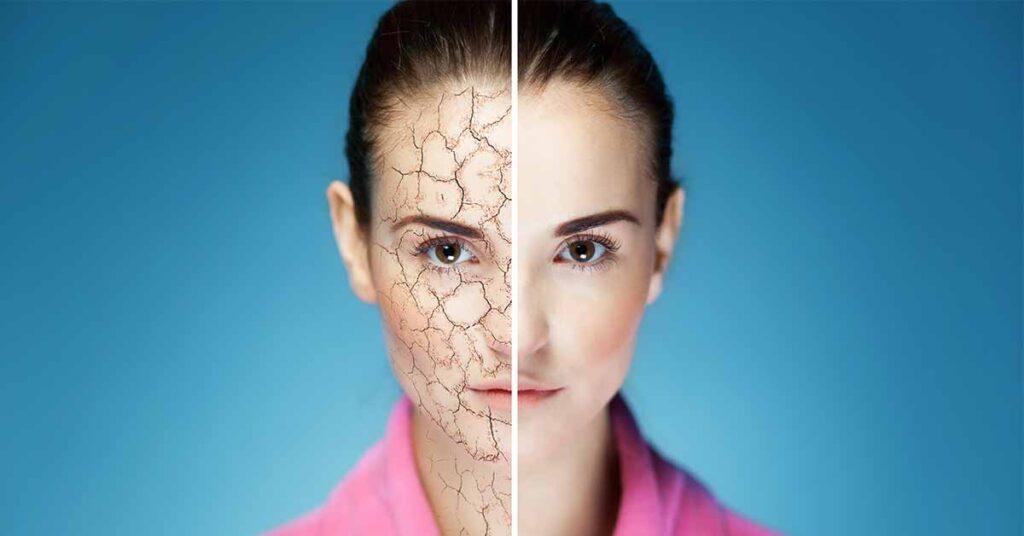
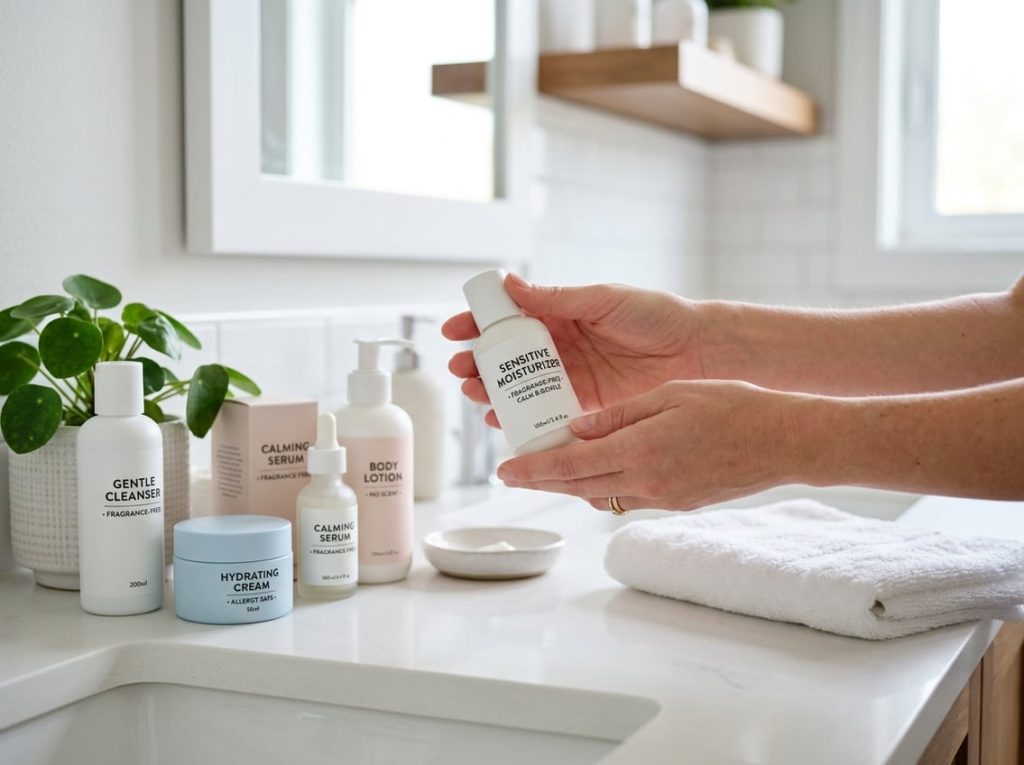
If your skin stings, burns, or turns red after using skincare products, fragrance could be the problem. Many people with sensitive skin react to synthetic fragrance, which shows up in everything from cleansers to moisturizers. Fragrance-free skincare removes added scent ingredients that can trigger irritation, allergic reactions, and skin barrier damage, making it a safer choice for reactive skin types.
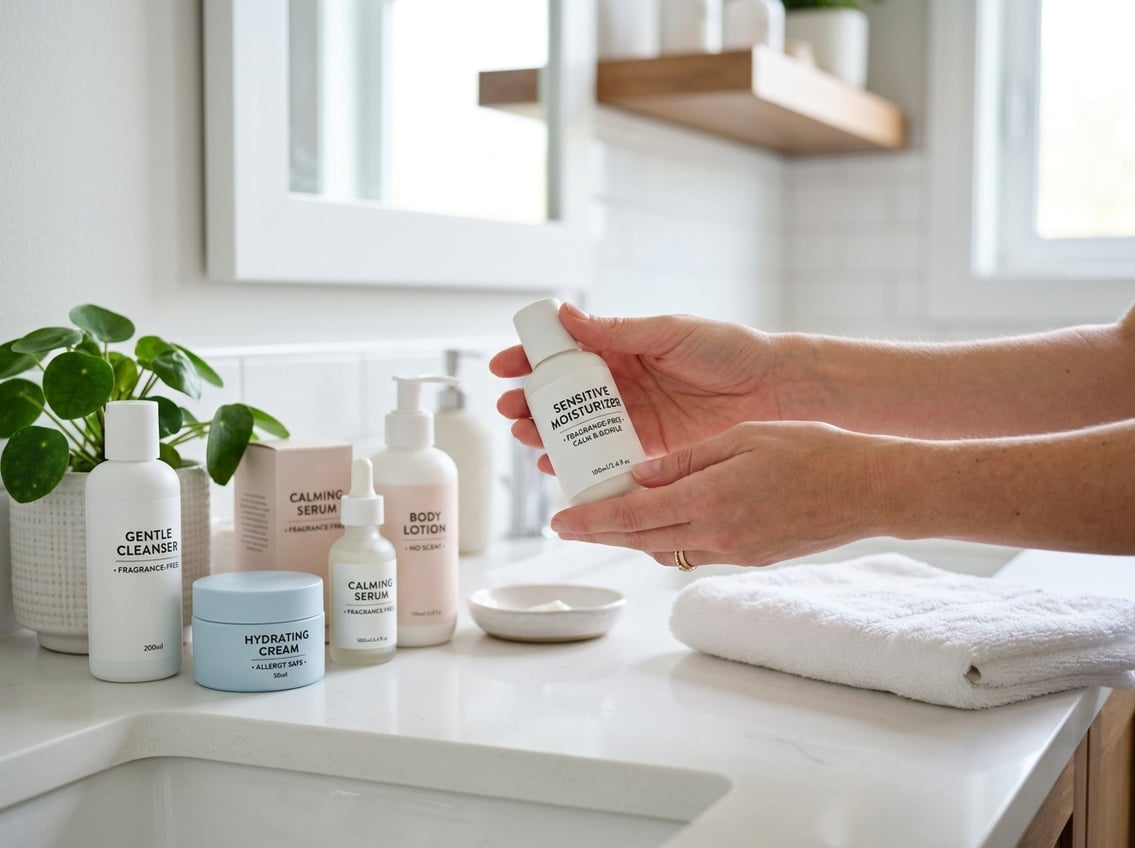
Synthetic fragrance allergies can develop over time, even if you’ve used scented products for years without trouble. Your skin might feel tight, itchy, or inflamed after applying products that smell nice but contain hidden irritants. The good news is that switching to fragrance-free options can help calm your skin and rebuild your protective barrier.
Learning to spot fragrance on ingredient labels and understanding the difference between fragrance-free and hypoallergenic products puts you in control of your skincare routine. You can build a simple, effective routine that works for sensitive skin without guessing which products will cause problems.
Key Takeaways
- Fragrance-free skincare eliminates added scent ingredients that commonly trigger irritation and allergic reactions in sensitive skin
- Reading ingredient labels carefully helps you avoid synthetic fragrance, parfum, and essential oils that can damage your skin barrier
- A simple fragrance-free routine with gentle cleansers, barrier-repairing moisturizers, and sunscreen can calm reactive skin
Why Fragrance-Free Matters for Sensitive Skin
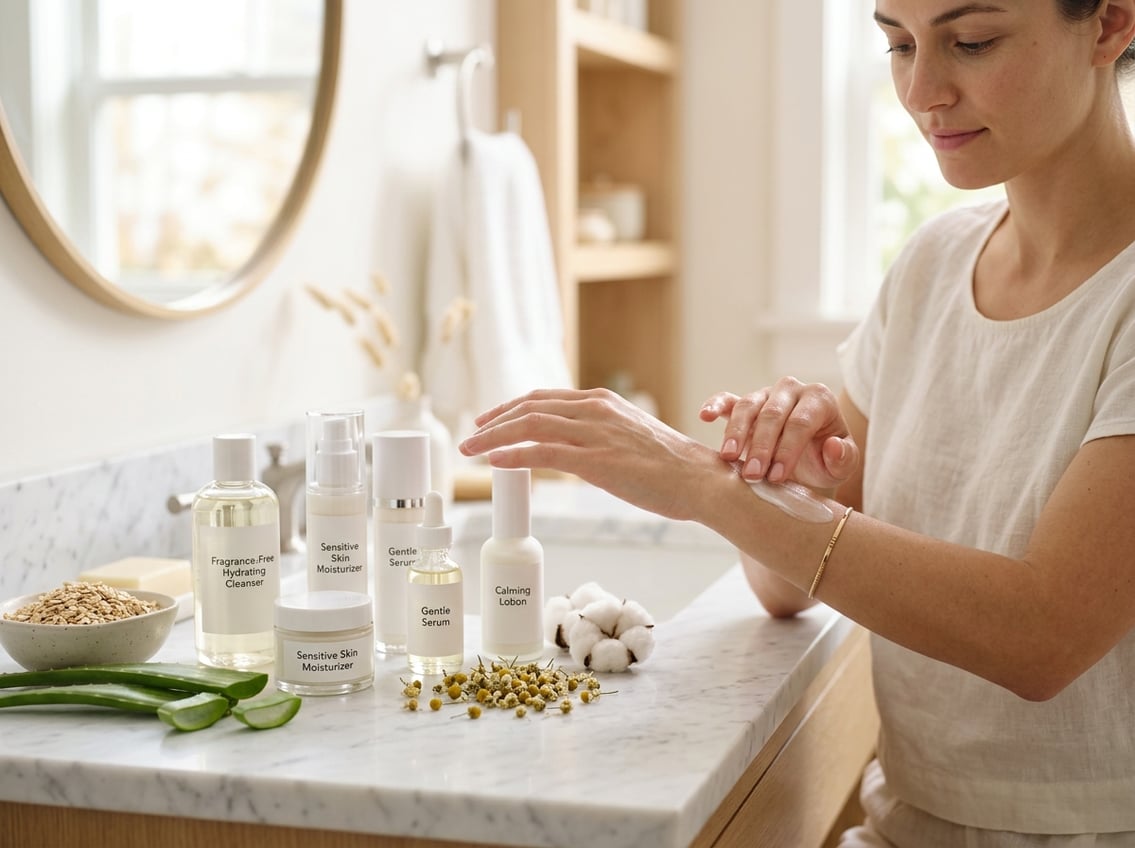
Fragrances in skincare products can cause serious problems for your skin, especially if you have conditions like eczema or rosacea. Understanding how these ingredients affect your skin barrier and trigger reactions helps you make better choices for your skincare routine.
Impact of Fragrance on Skin Health
Fragrance compounds damage your skin barrier, which is your skin’s protective outer layer. When this barrier breaks down, your skin loses moisture faster and becomes more vulnerable to irritants and bacteria.
Both synthetic and natural fragrances can cause problems. Essential oils, while natural, contain the same irritating compounds as synthetic fragrances. These ingredients create inflammation in your skin even when you don’t see visible reactions.
Your skin needs to use energy to defend itself against fragrance compounds. This constant stress prevents your skin from repairing itself properly. Fragrance-free skincare helps reduce unnecessary stress on the skin so your barrier can focus on healing and staying healthy.
Repeated exposure to fragrances can make your skin more sensitive over time. You might not react to a product at first, but develop sensitivity after weeks or months of use.
Reducing Skin Irritation and Allergic Reactions
Fragrance is the number one cause of skin reactions in skincare. Contact dermatitis from fragrances shows up as redness, itching, burning, or dry patches on your skin.
Studies show that up to 1 in 10 people are sensitized to fragrance allergens worldwide. This makes fragrance one of the most common allergens you’ll encounter in personal care products.
Common reactions to fragrance include:
- Stinging or burning sensations
- Red, inflamed patches
- Dry, flaky skin
- Small bumps or hives
- Itching that gets worse over time
Fragrance-free products lower your risk of these reactions significantly. Your skin can calm down and function normally without constant irritation.
Sensitive and Allergy-Prone Skin Considerations
If you have eczema-prone skin, fragrances make your flare-ups worse and harder to control. The same applies to rosacea, where fragrance triggers increased redness and inflammation.
People with allergy-prone skin need to avoid fragrances completely. Your immune system stays on high alert when exposed to these compounds, creating a cycle of sensitivity.
Fragrance sensitivities don’t just affect your skin. Many people experience headaches or find that scented products act as a migraine trigger. This makes fragrance-free products important for your overall health, not just your skin.
Conditions that benefit from fragrance-free products:
| Skin Condition | Why Fragrance-Free Helps |
|---|---|
| Eczema | Reduces inflammation and prevents flare-ups |
| Rosacea | Minimizes redness and irritation triggers |
| Contact Dermatitis | Eliminates primary allergen source |
| Psoriasis | Decreases skin barrier stress |
Your skin can’t tell you it’s being damaged until the harm is done. Choosing fragrance-free products protects your skin before problems start.
Understanding Fragrance Definitions in Skincare

Product labels can be confusing when it comes to fragrance claims. Terms like fragrance-free, unscented, and parfum have specific meanings that affect whether a product is safe for your sensitive skin.
Distinguishing Fragrance-Free, Unscented, and Masking Fragrance
Fragrance-free products contain no added scent ingredients, whether synthetic or natural. This means truly fragrance-free formulas avoid all volatile fragrance ingredients, including essential oils.
Unscented products are different. They may still contain masking fragrances to cover up the natural smell of the ingredients. These masking fragrances are still scent chemicals that can trigger reactions in your skin.
The key difference is that unscented doesn’t mean fragrance-free. A product can smell neutral but still include fragrance chemicals on the ingredient list. Always check the full ingredient list rather than relying on front-label claims.
Synthetic Fragrance vs. Natural Fragrance
Synthetic fragrances appear on labels as “fragrance” or “parfum.” This single term can hide up to 300 different undisclosed chemicals. These ingredients don’t require individual listing due to trade secret protections.
Natural fragrances include essential oils and plant extracts added for scent. Many people assume these are safer, but they can irritate your skin just as much as synthetic versions. Essential oils like lavender, peppermint, and citrus contain the same allergens found in synthetic fragrances.
Both types can cause problems for sensitive skin. Your skin doesn’t distinguish between natural and synthetic when it comes to allergic reactions.
Common Fragrance Allergens to Avoid
Linalool and limonene are two of the most common fragrance allergens. You’ll find them in both synthetic fragrances and natural essential oils. These chemicals appear in citrus scents and floral fragrances.
Eugenol shows up in clove, cinnamon, and basil oils. Benzyl alcohol works as both a preservative and fragrance ingredient. Both can trigger contact dermatitis in sensitive individuals.
Phthalates are synthetic chemicals used to make scents last longer. They’re often hidden under the term “parfum” on ingredient lists.
The EU requires labeling of 26 specific fragrance allergens when present above certain levels. Fragrance triggers 30 to 45% of cosmetic allergic reactions according to the American Academy of Dermatology.
Recognizing Synthetic Fragrance Allergy and Sensitivities
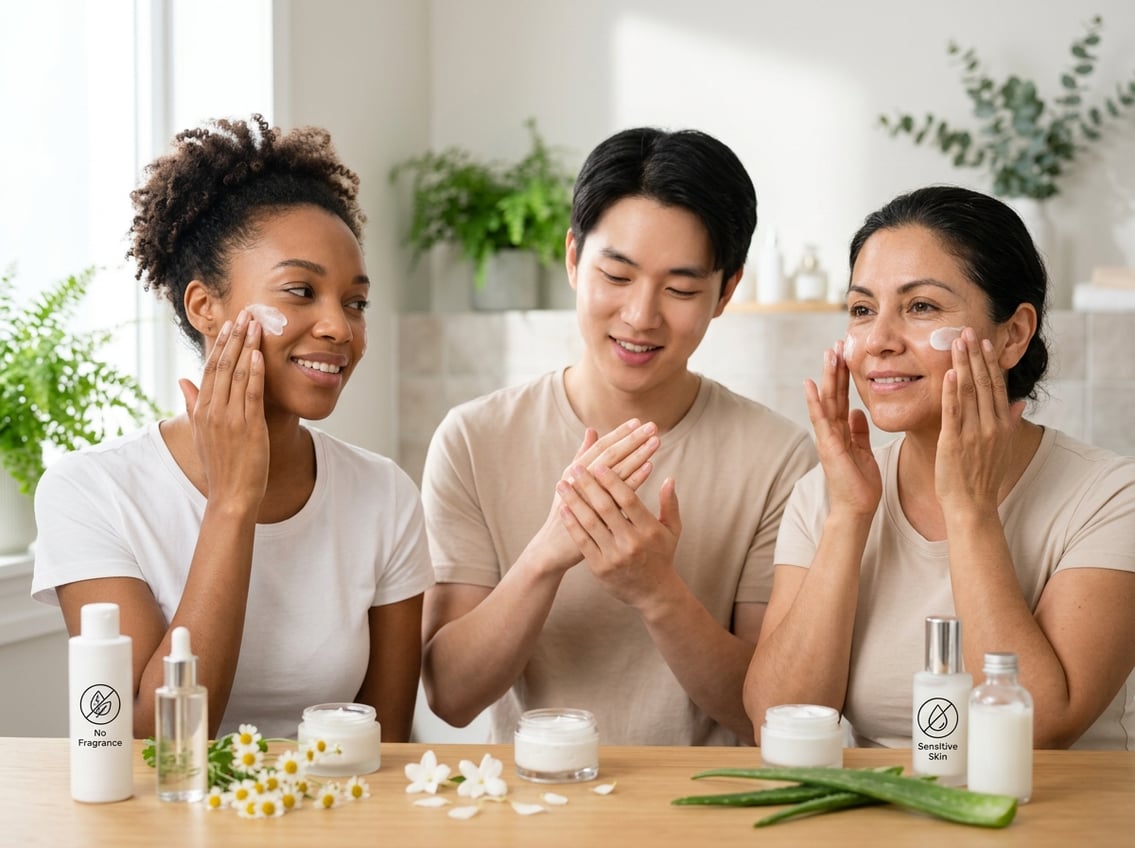
Fragrance allergies affect between 1 to 4% of the general population, but that number jumps to 8 to 15% among people seeing dermatologists for contact dermatitis. Synthetic fragrances are usually derived from petrochemicals and can trigger both immediate irritation and delayed allergic reactions that develop over time.
Symptoms of Fragrance Allergies
Your skin may react to fragrance in two different ways. Irritant contact dermatitis happens when fragrance chemicals disrupt your skin’s protective barrier, causing redness, stinging, or burning right after you use a product. This can happen to anyone, even if you don’t have allergies.
Allergic contact dermatitis works differently. Your immune system becomes sensitive to a specific fragrance ingredient on first exposure. The next time you encounter that ingredient, your body launches an immune response within 24 to 48 hours.
You might notice red, swollen patches where the product touched your skin. Itching is usually intense and can last for days. Small blisters or weeping skin may appear in severe cases.
Fragrance triggers 30 to 45% of cosmetic allergic reactions according to the American Academy of Dermatology. The reaction isn’t limited to your face—fragrance in body lotions, laundry detergent, or hand soap can cause problems anywhere on your body.
How Fragrance Can Affect Skin Conditions
If you have eczema, rosacea, or already-compromised skin, fragrance poses extra risks. Your damaged skin barrier lets fragrance chemicals penetrate deeper, increasing both irritation and sensitization risk.
Eczema flares become more frequent and severe when you use fragranced products. The National Eczema Association lists fragrance as a top trigger to avoid. Your skin stays in a cycle of inflammation that prevents healing.
Rosacea patients often experience immediate flushing, burning, or stinging from fragrance exposure. The ingredients dilate blood vessels and trigger inflammatory pathways that worsen redness and visible capillaries.
Natural fragrances from essential oils can still cause skin reactions in people with sensitive skin conditions. Lavender oil contains linalool and linalyl acetate, both known allergens. Tea tree oil ranks in the top 10 contact dermatitis triggers on patch tests.
Long-Term Effects and Sensitization
Once your immune system becomes sensitized to a fragrance allergen, you stay sensitized for life. Each exposure reinforces the allergic response and may lower the threshold needed to trigger symptoms.
You might tolerate a fragranced moisturizer for months or years before suddenly developing a reaction. This delayed sensitization happens because your immune system needs repeated exposure to build up antibodies against the allergen.
Some people develop cross-reactivity, meaning sensitivity to one fragrance compound makes you react to chemically similar ingredients. If you’re allergic to linalool in synthetic fragrance, you may also react to it in lavender essential oil.
Certain synthetic musks may disrupt beneficial skin bacteria, potentially affecting your skin’s long-term health beyond visible reactions. Fragrance can also act as a migraine trigger in sensitive individuals, causing headaches that start during product application.
Choosing Safe Skincare: Decoding Ingredient Labels
Reading ingredient labels helps you avoid hidden allergens and pick products that won’t irritate your skin. Look past marketing claims on the front of packaging and focus on what’s actually inside the bottle.
Checking for Hidden Fragrance Ingredients
The term “fragrance” or “parfum” on an ingredient list can represent dozens of unlisted chemicals. Companies don’t have to reveal specific fragrance components because they’re considered trade secrets. This makes it hard to know what you’re putting on your skin.
Even products labeled fragrance-free may contain fragrance ingredients added for purposes other than scent. For example, bisabolol might be added as a soothing agent, but it’s still a chamomile-related fragrance. Check the full ingredient list rather than trusting front-label claims.
Watch for these common hidden fragrance ingredients:
- Linalool
- Limonene
- Geraniol
- Citronellol
- Essential oils (lavender oil, tea tree oil, citrus oils)
Products marked “unscented” aren’t the same as fragrance-free. Unscented items often contain masking fragrances that cover up the natural smell of other ingredients.
The Role of Certifications and Seals
Certifications provide some guidance, but they’re not always regulated. The National Eczema Association seal indicates products meet specific standards for sensitive skin. This seal requires independent testing and ingredient review.
The term hypoallergenic has no standardized or FDA-regulated definition. Brands define it themselves, so products with this label can still contain known allergens. It doesn’t mean allergy-proof.
Dermatologist-tested means a dermatologist evaluated the product on human skin. However, this doesn’t tell you how many people were tested, what the results showed, or if there was a control group. It’s not the same as dermatologist-approved.
Look for products that are paraben-free, sulfate-free, phthalate-free, and dye-free if you have sensitive skin. These ingredients can trigger reactions in some people.
Ingredient Transparency and Patch Testing
Products with fewer ingredients are easier to tolerate and simpler to troubleshoot if you have a reaction. Ingredient transparency means brands clearly list all components in order of concentration.
Ingredients appear in descending order by weight. The first five ingredients make up most of the product. Active ingredients must be listed separately at the top.
Always patch test new products before applying them to your face or large areas. Apply a small amount to your inner forearm. Wait 24 to 48 hours and check for redness, itching, or swelling.
Keep a record of products that work for you and those that cause reactions. This helps you identify problem ingredients over time. Compare ingredient lists between products to spot patterns.
Use trusted databases that help identify products based on your specific allergen profile. These tools can filter out items containing ingredients you need to avoid.
Key Ingredients for Barrier Repair and Hydration
When your skin barrier is compromised, specific ingredients can restore its protective function and lock in moisture. Ceramides work together with cholesterol and fatty acids to rebuild the skin’s structural lipid layer, while humectants like hyaluronic acid and niacinamide address hydration and inflammation from multiple angles.
Benefits of Ceramides, Hyaluronic Acid & Niacinamide
Ceramides are the primary structural lipids in your skin barrier, making up about 50% of the protective outer layer. They work best when combined with cholesterol and fatty acids in a barrier repair moisturizer. Studies show that concentrations between 0.01–0.3% reduce water loss and help prevent eczema flares with consistent use.
Niacinamide stands out because it stimulates your skin’s own ceramide production from within. At concentrations of 2–4%, it reduces inflammation and strengthens the barrier over 4–8 weeks of use. Higher concentrations around 5% also help fade post-inflammatory marks and improve uneven skin tone.
Hyaluronic acid pulls up to 1,000 times its weight in water into your skin. The molecular weight matters more than the concentration—look for formulas with multiple sizes. Low molecular weight hyaluronic acid penetrates deeper, while high molecular weight versions provide surface hydration. Always layer it under a moisturizing cream or occlusive to prevent it from drawing water out of your skin in dry environments.
Other Soothing and Hydrating Components
Glycerin is a simple but effective humectant that draws moisture into your skin and keeps it there. It works well alongside other hydrating ingredients without causing irritation.
Colloidal oatmeal calms irritated skin and reduces inflammation. It contains beta-glucan, which helps restore damaged barrier function while soothing redness and itching.
Panthenol (vitamin B5) accelerates wound healing and reduces inflammatory signals in compromised skin. At 1% or higher, it speeds up barrier recovery after damage. It also acts as a humectant and has virtually zero sensitization risk, making it ideal for reactive skin.
Centella asiatica and its active compounds like madecassoside reduce inflammation through multiple pathways. It stimulates collagen production and reduces water loss in damaged skin. Look for products with isolated triterpenoids at 0.1% or higher rather than generic centella extract for more predictable results.
Anti-Aging and Brightening Additions
Peptides signal your skin to produce more collagen and support the dermal structure beneath your barrier. They work well in fragrance-free formulas without causing sensitivity in most people.
Vitamin C provides antioxidant protection and has brightening effects on uneven skin tone. Choose stable forms like ascorbyl glucoside or magnesium ascorbyl phosphate if you have sensitive skin, as these are less likely to irritate than pure L-ascorbic acid.
Lactic acid is a gentle AHA that exfoliates while maintaining moisture levels better than other acids. Use it cautiously during barrier repair—only 1–2 times per week at low concentrations (5% or less) to avoid further damage.
Antioxidants like vitamin E and green tea extract protect your healing barrier from environmental stress. They work behind the scenes to prevent ongoing damage while other ingredients focus on active repair.
Building a Fragrance-Free Skincare Routine
A complete fragrance-free routine requires careful product selection for every step, from cleansing to sun protection. Your routine should adapt to daily needs, seasonal shifts, and special circumstances like pregnancy or caring for babies with sensitive skin.
Daily and Nighttime Steps
Start your morning with a fragrance-free cleanser that removes oil and debris without stripping your skin. A gentle facial cleanser or gel cleanser works well for most skin types. Look for products from brands like CeraVe, Vanicream, or La Roche-Posay that formulate without synthetic fragrances.
After cleansing, apply a serum if you use active ingredients like vitamin C or niacinamide. Choose fragrance-free options with short ingredient lists.
Follow with moisturizer while your skin is still slightly damp. This helps lock in hydration and supports a compromised skin barrier.
Apply sunscreen as your final morning step. Mineral sunscreen with SPF 50 offers broad-spectrum protection without fragrance. Physical blockers like zinc oxide and titanium dioxide are less likely to cause reactions than chemical filters.
Your nighttime routine can skip sunscreen but should include the same cleansing and moisturizing steps. You can add treatment products like retinoids or exfoliating acids at night if your skin tolerates them.
Don’t forget your body. Use fragrance-free body wash and unscented shampoos and conditioners to avoid reactions on your scalp and torso.
Adapting to Seasonal or Life Changes
Your skin’s needs shift with weather, hormones, and life stages. In winter, you may need a richer moisturizer to combat dry indoor air. Summer often requires lighter textures and more frequent sunscreen application.
Pregnancy and menstruation can make your skin more reactive. Listen to your skin during these times and simplify your routine if you notice increased sensitivity.
If you develop redness or stinging, strip back to basics. Use only a gentle cleanser, simple moisturizer, and sunscreen until your skin calms down. A compromised skin barrier needs time to heal before you reintroduce other products.
Climate changes require adjustment too. Moving from a humid to dry environment means adding more hydrating layers. Hot weather may mean switching from cream to gel textures.
Special Considerations for Babies and Medical Needs
Babies have thinner skin that absorbs ingredients more readily. Choose fragrance-free skincare specifically formulated for infants. Avoid essential oils and plant extracts that marketers call “natural” but still contain allergens.
Use plain water or a very mild fragrance-free cleanser for diaper changes. Apply a thick barrier cream at each change to prevent irritation.
If you have eczema or rosacea, work with a dermatologist to build a fragrance-free skincare routine tailored to your condition. Medical-grade brands often have the cleanest formulations.
People with contact dermatitis must avoid all fragrance compounds, including those hidden in “unscented” products. Read ingredient lists carefully and watch for terms like linalool, limonene, and citral.
Top Fragrance-Free Skincare Brands and Products
Several brands have built their reputations on creating products without synthetic fragrances or natural fragrance compounds. CeraVe, Vanicream, La Roche-Posay Toleriane, and Avène lead the market with dermatologist-recommended formulas designed for reactive skin types.
Cleansers, Moisturizers, and Serums
CeraVe offers some of the most accessible fragrance-free options available at drugstores. Their Hydrating Facial Cleanser contains ceramides and hyaluronic acid to support your skin barrier while removing dirt and makeup. The CeraVe Moisturizing Cream provides time-released hydration through MVE technology without any added fragrance.
Vanicream was created specifically for people with contact allergies and sensitive skin conditions. The Vanicream Gentle Facial Cleanser uses one of the simplest formulations you can find. It leaves out fragrance, dyes, parabens, and formaldehyde releasers. Their Moisturizing Skin Cream works as a rich, occlusive moisturizer that protects reactive skin.
La Roche-Posay Toleriane products contain prebiotic thermal water and ceramide-3 to calm irritation. The best fragrance-free skincare brands formulate without parfum and most natural fragrance compounds that trigger allergic reactions.
Avène Tolérance Extrême Emulsion uses only seven essential ingredients in sterile packaging. It contains no preservatives and no fragrance, making it one of the most minimal moisturizers available for extremely reactive skin.
Sunscreens and Body Care Essentials
Your sunscreen choice matters just as much as your moisturizer when avoiding fragrance allergens. La Roche-Posay Anthelios Mineral Sunscreen SPF 50 uses 100% mineral filters with zinc oxide and titanium dioxide. EltaMD UV Clear Broad-Spectrum SPF 46 adds niacinamide to calm sensitive and acne-prone skin while protecting from UV damage.
Vanicream Sunscreen SPF 50+ follows the brand’s commitment to eliminating common allergens. It provides mineral-based protection without any fragrance ingredients.
For body care, First Aid Beauty Ultra Repair Cream works on both face and body with colloidal oatmeal, shea butter, and ceramides. Many people with eczema or dermatitis find relief with this fragrance-free formula. The Ordinary offers multiple single-ingredient serums that are fragrance-free, though you should verify each product individually before purchasing.
Key Brand Highlights and Certifications
National Eczema Association Seal of Acceptance marks products that meet strict requirements. These certified items must be free of fragrance and other common irritants. Both CeraVe and Vanicream have multiple products carrying this seal.
Some brands also offer cruelty-free and vegan options within their fragrance-free lines. The Ordinary and First Aid Beauty are cruelty-free brands that don’t test on animals.
When shopping for hypoallergenic options, look beyond marketing claims on the front label. Check ingredient lists for terms like parfum, fragrance, aroma, or essential oils. Even products labeled “for sensitive skin” can contain masking fragrances that trigger reactions in sensitized individuals.
| Brand | Key Features | Best For |
|---|---|---|
| CeraVe | Ceramides, hyaluronic acid, MVE technology | Barrier repair and daily hydration |
| Vanicream | Minimal ingredients, allergen-free | Contact dermatitis and extreme sensitivity |
| La Roche-Posay Toleriane | Prebiotic thermal water, ceramide-3 | Sensitive, allergy-prone skin |
| Avène | 7-ingredient formula, sterile packaging | Highly reactive skin types |
| First Aid Beauty | Colloidal oatmeal, cruelty-free | Eczema and body care needs |
Frequently Asked Questions
Reading product labels carefully and knowing which ingredients to avoid can protect your skin from unwanted reactions. Understanding how to identify fragrance-related irritation and take proper steps to test new products helps you build a safer skincare routine.
How can I tell whether a skincare product is truly fragrance-free or just unscented?
Check the ingredient list for terms like “fragrance,” “parfum,” or “aroma.” These indicate added scents.
Essential oils and fragrance allergens listed individually can mean a product is scented without using those obvious terms. Look for ingredients like linalool, limonene, geraniol, citronellol, and botanical oil names such as lavender oil, bergamot oil, or ylang ylang.
Unscented products may contain masking fragrances to hide the natural smell of ingredients. Truly fragrance-free skincare products are made without synthetic or natural scents that can irritate the skin.
What are the most common signs that my skin is reacting to synthetic fragrance?
Redness is often the first visible sign of a fragrance reaction. Your skin may look flushed or develop red patches shortly after applying a product.
Itching, burning, or stinging sensations can occur immediately or develop over several hours. Some people experience tightness or discomfort without visible changes at first.
Breakouts, small bumps, or hives may appear within 24 to 48 hours of exposure. Dry, flaky patches or increased sensitivity to other products can develop as your skin barrier becomes compromised.
Which skincare ingredients are most likely to trigger irritation in fragrance-sensitive skin?
Synthetic fragrance and essential oils are two of the most common triggers for redness, burning, breakouts, and irritation. These ingredients can disrupt your skin’s protective barrier.
Individual fragrance components like linalool, limonene, citral, eugenol, and coumarin frequently cause allergic reactions. These appear in both synthetic fragrances and natural essential oils.
Botanical extracts marketed as natural alternatives can be just as irritating. Citrus oils, cinnamon, peppermint, tea tree oil, and rose oil all contain volatile compounds that trigger sensitivity in many people.
How can I calm and repair my skin barrier after a fragrance-related reaction?
Stop using all products immediately except for a gentle, fragrance-free cleanser and plain moisturizer. Your skin needs a break from active ingredients while it heals.
Apply products with ceramides, niacinamide, or colloidal oatmeal to support barrier repair. These ingredients help restore your skin’s protective function without adding stress.
Keep your routine minimal for at least one to two weeks. Avoid harsh cleansers, exfoliants, retinoids, and acids until redness and sensitivity completely resolve.
What is the best way to patch test a new product if I have a history of fragrance allergy?
Apply a small amount of the product to the inside of your forearm or behind your ear. These areas have thinner, more sensitive skin that reacts quickly.
Leave the product on for 24 to 48 hours without washing it off. Check for any redness, itching, bumps, or burning during this time.
If no reaction occurs on your test area, apply the product to a small section of your face for another 24 to 48 hours. Choose an area where you typically experience sensitivity, such as near your jawline or cheek.
How can I choose deodorant, haircare, and body products that won’t trigger fragrance sensitivity while still feeling fresh?
Look for products labeled “fragrance-free” rather than “unscented” across all your personal care items. Check ingredient lists for the same fragrance compounds you avoid in skincare.
Choose deodorants with simple formulas containing baking soda, arrowroot powder, or mineral salts without added scents. Many brands now offer effective options without synthetic fragrances or essential oils.
Select shampoos and conditioners formulated for sensitive scalps that skip fragrance and harsh sulfates. Your hair products touch your face, neck, and back throughout the day, so they need the same careful attention as your facial skincare.