
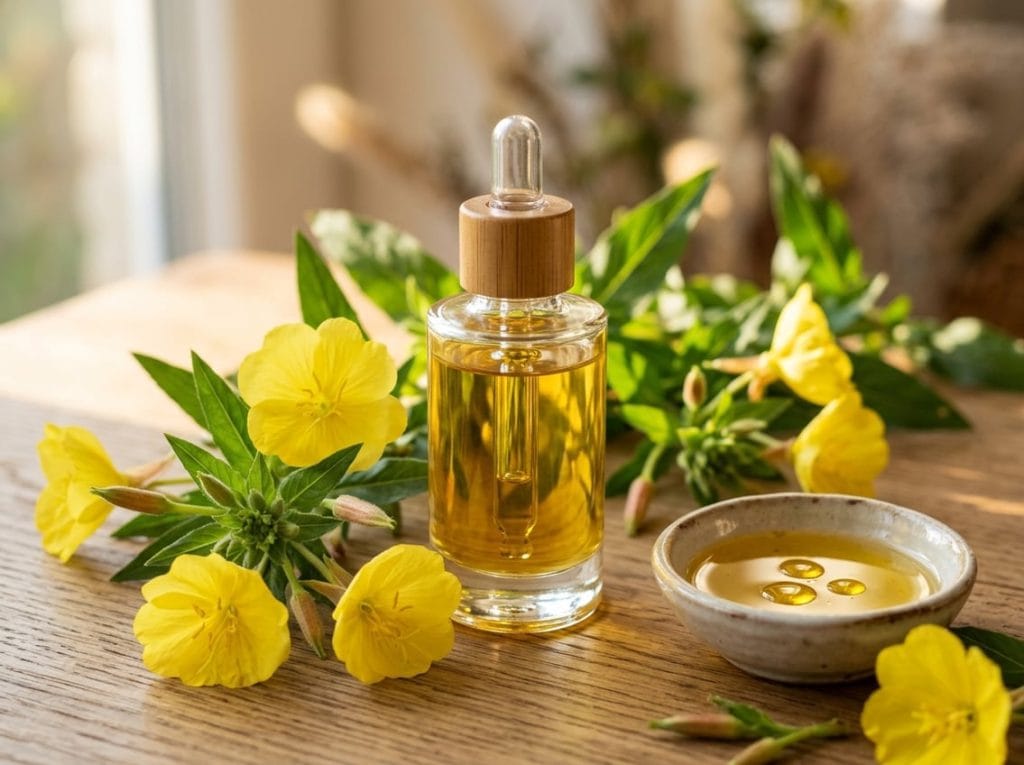
Your skin’s always changing—hormones, weather, stress, you name it. Evening primrose oil is one of those natural options people reach for when facing common skin problems.
This botanical oil is packed with unique fatty acids that work with your body to support healthy skin—inside and out.
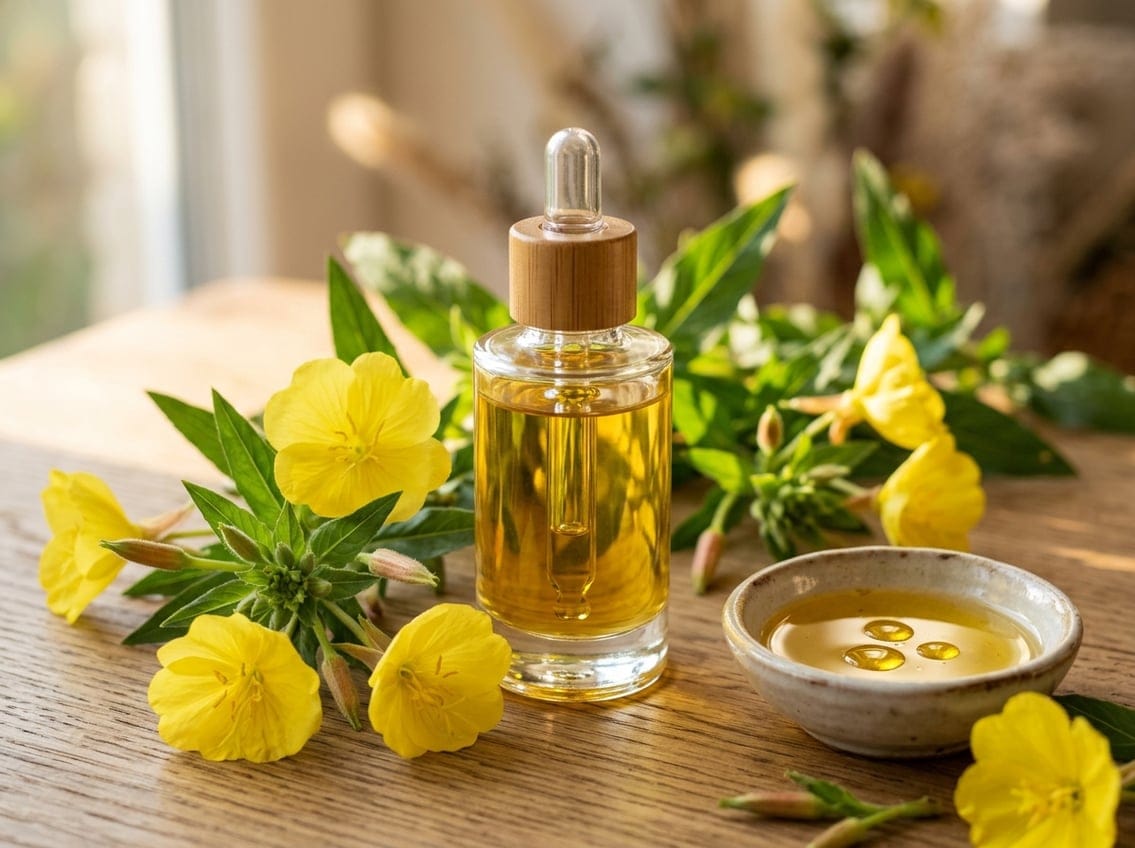
Evening primrose oil helps strengthen your skin barrier, reduce inflammation, and address hormonal skin issues like acne and dryness.
The oil contains gamma-linolenic acid (GLA), which your skin uses to build protective layers and calm irritation. Evening primrose oil provides anti-inflammatory GLA for skin barrier support at doses of 2-6 grams daily.
You can use evening primrose oil in two ways. Take it as a supplement to support your skin from within, or apply it directly to your face as part of your skincare routine.
Both methods help your skin stay hydrated and balanced, especially during times of hormonal change. Honestly, it’s a pretty versatile oil.
Key Takeaways
- Evening primrose oil contains GLA that strengthens your skin barrier and improves moisture retention
- The oil works for hormonal skin concerns including acne, PMS breakouts, and menopause-related dryness
- You can take evening primrose oil as a supplement or apply it topically to calm inflammation and support sensitive skin
What Is Evening Primrose Oil and How Does It Work?

Evening primrose oil contains omega-6 fatty acids that support skin hydration and strengthen the protective barrier.
The oil works by delivering linoleic acid and gamma-linolenic acid directly to your skin cells.
Botanical Origin and Extraction
Evening primrose (Oenothera biennis) is a plant native to North and South America that grows throughout Europe and parts of Asia.
The plant has yellow flowers that open at sunset and close during daylight hours. Pure evening primrose oil comes from the seeds of this plant.
Manufacturers extract the oil through cold-pressing or solvent extraction methods. Cold-pressed versions usually keep more nutrients but, as you’d guess, cost more to make.
The seeds yield about 14-20% oil by weight. Native Americans used extracts from the plant’s stems and leaves for skin inflammation—so, it’s not exactly a new trend.
Key Fatty Acids: Linoleic Acid and GLA
Evening primrose oil primarily contains linoleic acid and gamma-linolenic acid (GLA), both omega-6 fatty acids.
Linoleic acid makes up about 65-80% of the oil’s content. GLA accounts for 8-14% of the total fatty acid profile.
Your body needs these essential fatty acids but can’t make them on its own. Linoleic acid helps maintain your skin’s barrier and reduces water loss.
GLA converts to compounds that regulate inflammation in your skin. The GLA mechanism works by supporting the production of anti-inflammatory molecules.
This process can help calm irritated skin and reduce redness. The combination of these fatty acids makes evening primrose oil different from most other botanical oils out there.
Absorption, Texture, and Suitability for Skin
Evening primrose oil has a light to medium texture. It absorbs into your skin more slowly than lightweight oils, but not as sluggish as something like coconut oil.
When applied to the skin, evening primrose oil helps moisturize and strengthen the skin barrier. This keeps your skin from losing as much water throughout the day.
The oil works well for dry skin types that need barrier support. You can use it alone or mix it with other skincare products.
The oil suits most skin types, though people with very oily skin might want to use smaller amounts. Some folks apply it directly as a facial oil, while others add a few drops to their moisturizer.
Skin Barrier Benefits and Moisture Retention

Evening primrose oil works to stabilize your skin’s outer layer while improving its ability to hold onto water. The oil delivers fatty acids that support barrier function and reduce moisture loss.
Strengthening the Skin Barrier
Your skin barrier is basically a shield between your body and the outside world. Evening primrose oil contains gamma-linolenic acid (GLA), an omega-6 fatty acid that helps repair and maintain this layer.
When you apply the oil, it provides building blocks your skin needs to create healthy cell membranes. The oil also contains phytosterols, plant compounds that calm irritation and support barrier repair.
Evening primrose oil stabilizes the top layers of the epidermis, making your skin more resistant to damage from harsh weather, pollution, and other irritants.
This strengthening effect helps your skin function better as a barrier. A stronger barrier means your skin can better protect itself from bacteria, allergens, and chemicals while keeping beneficial moisture locked inside.
Reducing Transepidermal Water Loss
Transepidermal water loss (TEWL) happens when water evaporates from your skin’s surface. High TEWL leaves your skin dry, tight, and uncomfortable.
Evening primrose oil helps restore your skin’s natural barrier to retain moisture more effectively. The GLA and other fatty acids fill gaps between skin cells, creating a more complete seal.
This seal slows down the rate at which water escapes from deeper skin layers. Studies show that regular use can measurably reduce TEWL.
Lower water loss means your skin stays hydrated for longer between applications of moisturizer. It’s a subtle but real difference.
Role in Hydration and Comfort
Improved barrier function directly increases skin hydration levels. Evening primrose oil increases water retention and improves overall moisture levels by preventing water from escaping through damaged or weakened areas of your barrier.
The oil doesn’t just add moisture on the surface—it helps your skin hold onto the water that’s already there. This makes your skin feel softer and more comfortable throughout the day.
For dry, uncomfortable skin, evening primrose oil provides a soothing effect. The nourishment from its fatty acid content helps relieve tightness and rough texture that come with barrier damage and dehydration.
Supporting Dry, Sensitive, and Reactive Skin
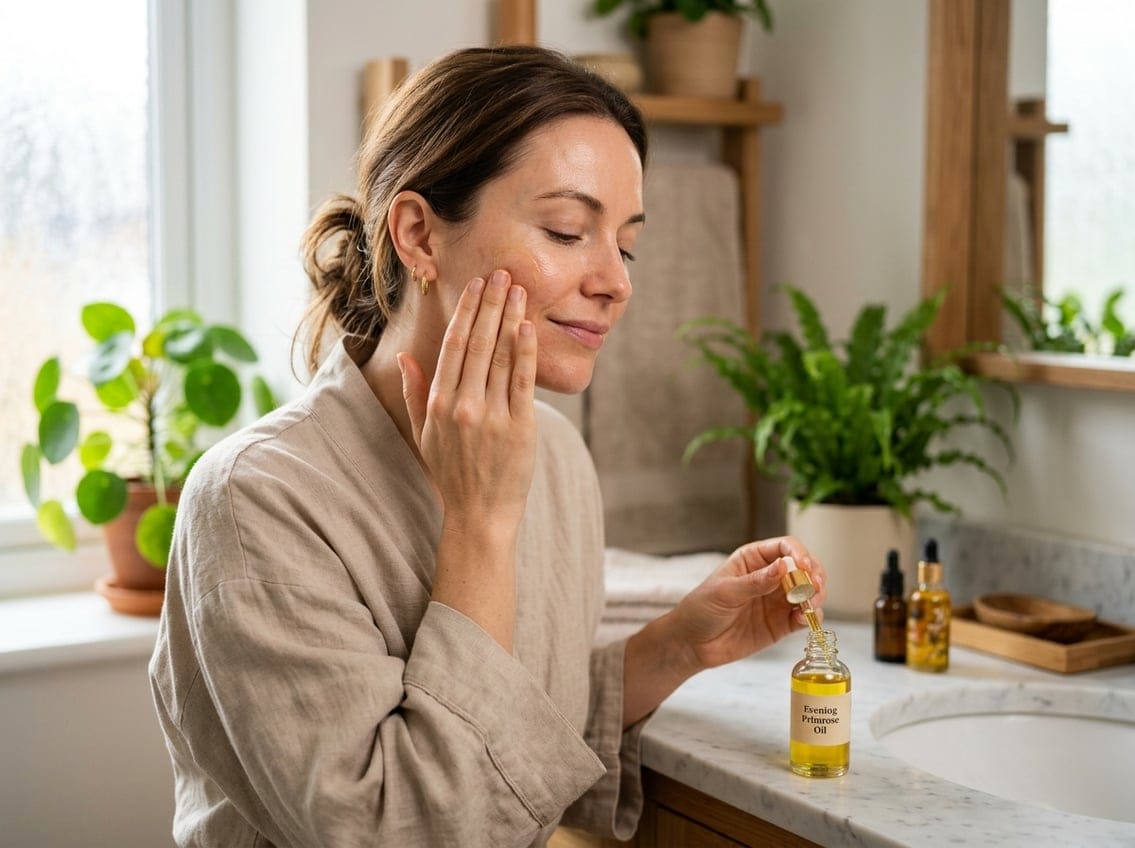
Evening primrose oil delivers targeted relief for skin struggling with dryness, sensitivity, and inflammation. Its unique fatty acid profile and emollient properties help strengthen your skin’s protective barrier.
Dry Skin and Flaky Patches
Evening primrose oil contains 65-75% linoleic acid, which helps restore moisture retention in dry skin. This high concentration works by reinforcing the lipid barrier that prevents water loss from your skin’s surface.
The oil also provides 9-11% gamma-linolenic acid (GLA), a rare omega-6 fatty acid that supports barrier-compromised skin.
When your skin barrier is damaged, it loses moisture faster and develops flaky patches. Daily use of evening primrose oil provides 2-6 g of GLA that improves skin hydration over time.
The fatty acids penetrate deeply to nourish dry areas from within, not just sitting on the surface. Your skin uses these essential fatty acids to build stronger cell membranes and produce natural oils.
This internal support helps eliminate persistent dry patches that don’t respond well to regular moisturizers. It’s not magic, but it can be a game changer for stubborn dryness.
Sensitive and Reactive Skin Types
GLA’s natural anti-inflammatory properties make evening primrose oil effective for sensitive skin prone to redness and irritation.
The oil calms inflammatory responses triggered by environmental stress, diet changes, or hormonal fluctuations. Reactive skin benefits from the oil’s ability to soothe and repair inflamed areas.
The combination of linoleic acid and GLA reduces the skin’s overactive immune response that causes sensitivity. Evening primrose oil is particularly effective for conditions like eczema where the skin barrier is weakened and inflammation is chronic.
The fatty acids help restore normal barrier function while reducing uncomfortable symptoms. Your sensitive skin gets gentle nourishment without harsh ingredients that could trigger extra reactions.
Emollient and Non-Comedogenic Qualities
Evening primrose oil acts as an emollient, smoothing and softening skin without clogging pores. Its fatty acids, like palmitic and oleic acid, are balanced so the oil glides on easily.
This oil scores low on the comedogenic scale, making it a good pick for many skin types, even if you tend to break out. Unlike heavier oils that are high in oleic acid, evening primrose oil is rich in linoleic acid, which can actually help balance oily skin.
Key emollient benefits:
- Fills spaces between skin cells for a smoother feel
- Creates a protective layer to lock in moisture
- Absorbs quickly and doesn’t leave you greasy
- Supports your skin’s natural lipid production
The lightweight feel offers deep hydration without the heaviness you get from some other emollients.
Anti-Inflammatory and Calming Effects
Evening primrose oil has gamma-linolenic acid, which your body turns into anti-inflammatory compounds. These help reduce redness and calm irritation, supporting your skin’s natural balance.
Gamma-Linolenic Acid and Inflammation
Gamma-linolenic acid (GLA) is an omega-6 fatty acid, making up about 8-10% of this oil. When you put it on your skin, GLA converts into dihomo-gamma-linolenic acid (DGLA).
DGLA serves as a base for anti-inflammatory molecules. Your skin uses it to make compounds that calm inflammation at the cellular level, which can help with skin issues.
GLA’s anti-inflammatory properties are especially helpful for irritation. Environmental stress, changes in diet, or hormonal shifts can all set off inflammation, and the GLA in this oil works with your body to address those triggers.
Reduction of Redness and Irritation
Evening primrose oil goes after redness at the source. Instead of covering up symptoms, it targets the causes.
Redness usually happens when blood vessels dilate from inflammation. The GLA and other fatty acids in this oil help calm that reaction. Its anti-inflammatory nature makes it a solid choice for irritated skin, like eczema, psoriasis, or acne.
You might notice:
- Less sensitivity – Skin reacts less to triggers
- Improved redness – Less visible inflammation
- Reduced irritation – Skin feels calmer and more comfortable
It’s especially nice for dry or dehydrated skin that tends to look red.
Prostaglandin E1 and Skin Balance
Your body turns DGLA into prostaglandin E1 (PGE1), which helps regulate inflammation. PGE1 keeps your skin’s inflammatory response in check.
This process happens naturally if you’ve got enough GLA. PGE1 tells your skin cells to dial down inflammation, helping avoid those chronic flare-ups.
Producing PGE1 from evening primrose oil can strengthen your skin barrier. With a balanced inflammatory response, your skin repairs itself better and holds onto moisture more easily.
Hormonal Skin Concerns: Acne, PMS, and Menopause
Hormonal swings can mess with your skin—think more oil, breakouts, or changes in hydration as you move through life. Evening primrose oil, with its GLA content, might help with these hormone-driven skin issues.
Hormonal Acne and Oil Regulation
Shifts in hormones often mean more sebum, which leads to clogged pores and breakouts—especially around the jawline, chin, and cheeks. Evening primrose oil may help acne-prone skin by delivering essential fatty acids that support your skin’s balance.
Research is a bit mixed on using evening primrose oil for acne. One nine-month study showed people who added it to their acne routine had better skin hydration, though it’s not a magic bullet for severe hormonal acne.
Used as a face oil, it can support your skin barrier without making things greasier, so both dry and acne-prone skin types might benefit.
Premenstrual Syndrome Relief
Right before your period, your skin often gets more sensitive. PMS can mean more breakouts, puffiness, and irritation.
Some studies suggest evening primrose oil may ease PMS symptoms. People reported less severe PMS after using it, and another study found GLA helped shorten and soften PMS episodes.
The fatty acids in this oil might help calm the inflammation that ramps up during your cycle. If you use it consistently, you could see better skin texture and less redness.
Menopause and Skin Changes
During menopause, estrogen drops off, which cuts down on collagen and natural oils. Your skin can get drier, thinner, and just feel different.
One six-week study showed menopausal women taking evening primrose oil had milder symptoms and found it easier to keep up with social activities. It didn’t really cut down on hot flashes, but night sweats were less frequent and severe.
Your skin barrier gets weaker during menopause, so it’s tougher to hold onto moisture. Evening primrose oil, with linoleic acid and GLA, can help rebuild that barrier. You might notice plumper, more hydrated skin, though the research here is still catching up.
Mastalgia and Cyclical Discomfort
Cyclical breast pain (mastalgia) usually pops up in the week before your period—probably thanks to the same hormonal changes that affect your skin. Evening primrose oil has been studied for this, but the results are all over the place.
Some folks saw less breast pain after two to twelve months of using it. In bigger studies, it did better than nothing, but it wasn’t really stronger than vitamin E or topical anti-inflammatories.
Since mastalgia and skin issues are both tied to hormones, managing one could help the other.
Addressing Eczema and Atopic Dermatitis
Evening primrose oil is often studied for eczema because of its GLA, though the research is pretty mixed. Still, it might help your skin barrier and add moisture to dry, irritated skin.
Hydration for Eczema-Prone Skin
If you have eczema, your skin loses water faster. Evening primrose oil’s fatty acids can boost hydration when used topically.
It works by delivering lipids right to your skin’s outer layer. Massage it into dry patches after cleaning the area, and it absorbs pretty well.
GLA targets barrier dysfunction, which is a big problem with eczema. When your skin barrier breaks down, you get dryness and itching.
Research on Atopic Dermatitis
A systematic review and meta-analysis of 27 studies (1,596 people) found that oral evening primrose oil didn’t really beat placebo for eczema symptoms.
Both self-reports and doctor assessments showed no real improvement compared to placebo. The numbers just didn’t move much.
Some clinical trials did show small benefits for itching and dryness, but the overall evidence doesn’t support taking it orally for eczema.
Balancing Lipids for Skin Comfort
Your skin needs certain lipids to stay comfy and less inflamed. Evening primrose oil gives you gamma-linolenic acid, which your body usually makes from linoleic acid.
There’s a theory that eczema involves low enzyme activity, so you don’t convert fats into anti-inflammatory compounds as well. That could mean you’re short on the good lipids your skin needs.
In one study with oral supplements, hemp seed oil actually worked better than evening primrose oil. Topical use might be a different story, since it gets those fatty acids right where you need them.
Nutritional Components and Antioxidant Support
Evening primrose oil isn’t just about fatty acids—it’s also got protective compounds that support your skin. You’ll find vitamin E and phytosterols in there, both of which help shield your skin from the environment and support its structure.
Antioxidants, Vitamin E, and Vitamin C
Evening primrose oil naturally has vitamin E, which helps guard your skin cells from damage by free radicals. That means it protects your skin barrier and helps prevent moisture loss.
Vitamin E works even better when you pair it with vitamin C in your routine. Evening primrose oil doesn’t have vitamin C in it, but you can always layer products. Together, they’re a stronger team than either one solo.
The antioxidants in this oil help neutralize the stuff that breaks down collagen and elastin. That’s especially handy when your skin faces daily stress from sun, pollution, or hormones. Vitamin E content runs about 20–50 mg per 100 grams of oil, so you’re getting a decent antioxidant boost.
Phytosterols, β-sitosterol, and Squalene
Evening primrose oil contains phytosterols, plant compounds that help strengthen your skin barrier. β-sitosterol is the main one in the mix and really helps calm irritated skin.
These compounds fill in gaps between skin cells, supporting your skin’s natural protective layer. β-sitosterol, in particular, can help reduce redness and discomfort if your skin is sensitive or reactive.
Phytosterols mimic the structure of cholesterol in your skin, which is why they’re so good for barrier function. There’s actual research backing this up, too.
Squalene shows up in evening primrose oil, just in smaller amounts. This stuff helps keep your skin soft and holds onto moisture.
Your skin makes squalene on its own, but that drops off as you get older. Using oils with squalene helps keep your skin more supple and hydrated.
Supporting Skin Elasticity and Firmness
The nutritional composition of evening primrose oil can help your skin stay structurally strong. Fatty acids and vitamins in the oil support collagen production, which keeps things firm.
As hormones shift, your skin needs extra nutrients to stay elastic. Evening primrose oil brings those building blocks, especially gamma-linolenic acid and vitamin E.
Vitamin E also helps protect your collagen from breaking down. Regular use can help your skin bounce back from daily stress.
The oil’s ingredients don’t just hydrate the surface—they support deeper proteins, too. That’s why it’s good for both firmness and flexibility, if you ask me.
How to Use Evening Primrose Oil: Oral and Topical Approaches
You can use evening primrose oil in two main ways: taking it as a supplement or putting it right on your skin. Which one you choose depends on what you’re hoping to fix, and maybe how patient you are for results.
Evening Primrose Oil Supplements and Dosage
Taking evening primrose oil supplements orally usually means swallowing capsules with water. Most folks take 4 to 5 capsules a day, spaced out.
There’s research suggesting that 500 mg per day for 12 weeks can help with skin moisture. You’ll see evening primrose oil supplements in strengths from 500 mg up to 1,300 mg per capsule.
Your body absorbs the gamma-linolenic acid (GLA) from the oil and uses it everywhere—including your skin. Some brands, like Efamol, make capsules aimed at hormonal balance and skin health.
Try taking your capsules with meals; it tends to help with absorption. You’ll probably need to stick with it for a few weeks before your skin feels any different.
Topical Application in Skincare Routines
You can apply evening primrose oil directly to clean skin before moisturizer. Just use a few drops and massage it into your face and neck.
Some people pierce a capsule and dab the oil onto dry patches. It’s handy for spot-treating areas that need extra moisture.
You can also mix a few drops into your moisturizer to bump up the hydration. At night is a good time for this, so the fatty acids can soak in while you sleep.
The linoleic acid in the oil helps restore your skin barrier, which is a lifesaver if your skin is dry or reactive.
Safety, Patch Testing, and Considerations
Before slathering it on your face, patch test evening primrose oil on a small spot—like your inner arm. Wait 24 hours to see if there’s any reaction.
Most people do fine with it, but oral supplements can sometimes cause mild digestive upset. If you’re pregnant, nursing, or on medication, it’s smart to check with your doctor first.
If you notice breakouts, redness, or sensitivity, stop using it. Store your evening primrose oil in a cool, dark place—heat and light can mess with the fatty acids.
Frequently Asked Questions
Evening primrose oil acts differently when you put it on your skin versus taking it as a supplement. How you use it really depends on your skin type and what you’re hoping to fix. Typical oral doses for skin support run from 2 to 6 grams daily, and you can use the oil both day and night.
Can evening primrose oil be applied to the face overnight without clogging pores?
Evening primrose oil has a light-ish texture and is generally non-comedogenic, so it shouldn’t clog pores for most people. You can use a few drops overnight, especially if your skin is dry or dehydrated.
If you’ve got oily or acne-prone skin, start with 1-2 drops mixed into your night cream instead of applying it straight. That way you can see how your skin reacts without overdoing it.
Evening primrose oil is about 70% linoleic acid, which can actually help balance oil in some skin types. Just keep an eye on your skin for the first week or so.
How should evening primrose oil be layered with moisturizer or facial serums for very dry skin?
Layer evening primrose oil after your water-based serums and before heavier creams. The usual rule: go from thinnest to thickest products.
For really dry skin, mix 2-3 drops of the oil into your moisturizer in your palm before applying. It helps the oil spread and keeps you from using too much.
You can also use the oil as the very last step to seal everything in. That works best at night when you’re not piling on makeup or sunscreen afterward.
Is evening primrose oil suitable for skin that feels hormonally reactive or easily inflamed?
Evening primrose oil is rich in gamma-linolenic acid (GLA), which reduces inflammation and strengthens your skin barrier. This makes it a solid pick for skin that flares up with hormones.
GLA’s anti-inflammatory powers can calm redness and sensitivity, especially during hormonal swings. A lot of people use it both on their skin and as a supplement when their skin acts up.
If your skin is already irritated, patch test first and wait a day to make sure it doesn’t make things worse.
Can evening primrose oil help support a compromised skin barrier and reduce tightness or flaking?
Evening primrose oil helps moisturize and strengthen the skin barrier, which can cut down on water loss and tightness. The essential fatty acids help repair the protective layer of your skin.
When your barrier’s struggling, you usually get flaking, tightness, and extra sensitivity. Using evening primrose oil regularly can help restore those functions over several weeks.
The GLA gives real barrier support and comfort if you stick with it. You might see less flaking in a week or two, but full repair can take up to 4-6 weeks.
What is the recommended oral dosage of evening primrose oil commonly used for eczema-prone skin?
The usual oral dose for skin support is 2 to 6 grams a day, according to research on evening primrose oil for skin. Most capsules are 500 to 1,300 mg, so you’ll need to take a few throughout the day.
For eczema-prone skin, a lot of people use 3 to 6 grams, split into two or three doses. Take them with food to avoid any stomach issues.
Don’t expect overnight results—improvements can take 6 to 12 weeks. It’s smart to start at the lower end of the dosage and see how your body reacts.
Should evening primrose oil supplements be taken in the morning or at night for skin benefits?
You can take evening primrose oil supplements whenever it works for you. The timing honestly doesn’t seem to change how your body absorbs the GLA.
What really matters is just taking it every day. That’s the key—consistency.
Some folks like to split their daily dose. They’ll take half in the morning, then the rest at night with meals.
This can sometimes make it easier on your stomach and help avoid any nausea or discomfort. If you prefer taking it just once a day, that’s fine too.
Pick a time that fits your routine, so you don’t forget. A lot of people find that taking it with their biggest meal helps with absorption and feels gentler on the stomach.