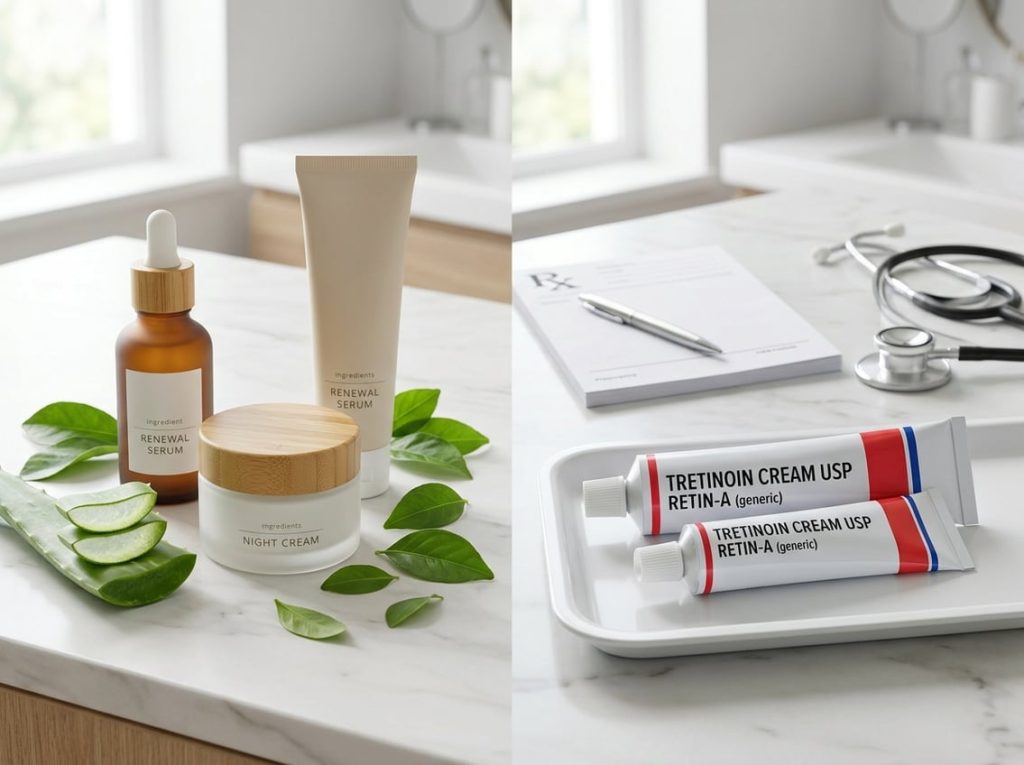
You’ve likely heard both retinol and tretinoin mentioned as powerful anti-aging ingredients, but understanding which one fits your skincare needs can feel confusing. Both belong to the retinoid family and come from vitamin A, yet they differ significantly in strength, availability, and how quickly they deliver results.
Tretinoin is a prescription retinoid that works faster and more powerfully than over-the-counter retinol, but retinol offers a gentler introduction to anti-aging skincare with fewer side effects.
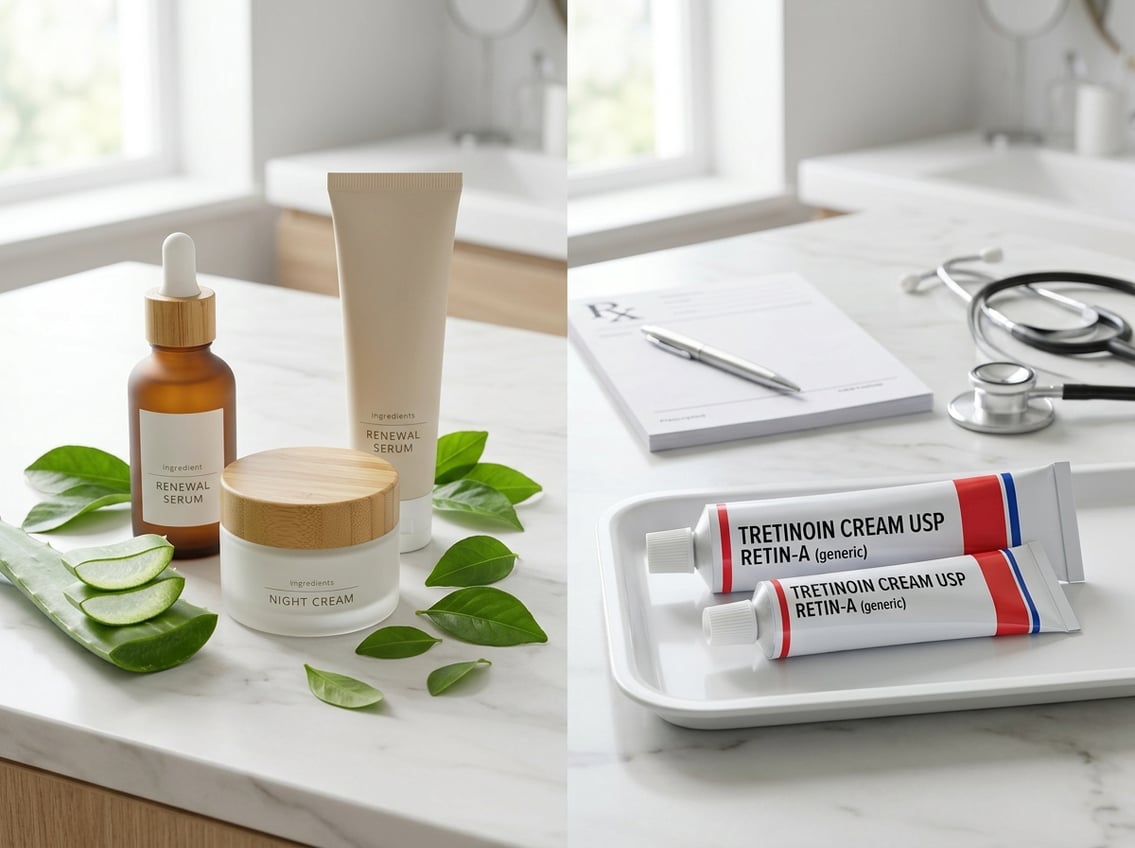
The choice between prescription tretinoin and over-the-counter retinol affects everything from how your skin reacts to how much you’ll spend on treatment. Tretinoin requires a doctor’s prescription and delivers retinoic acid directly to your skin, while retinol must convert through multiple steps before becoming active.
This conversion process makes retinol weaker but also means it causes less irritation for most people. Your decision depends on your skin goals, tolerance for potential irritation, and whether you want to start with a gentler approach or go straight to the strongest option available.
Both ingredients treat fine lines, wrinkles, and uneven skin tone, but they take different paths to get there.
Key Takeaways
- Tretinoin is stronger than retinol because it delivers active retinoic acid directly while retinol must convert in your skin first.
- You can buy retinol products without a prescription but need to see a doctor to get tretinoin.
- Both retinol and tretinoin improve signs of aging but tretinoin works faster with more potential for irritation.
Understanding The Retinoid Family
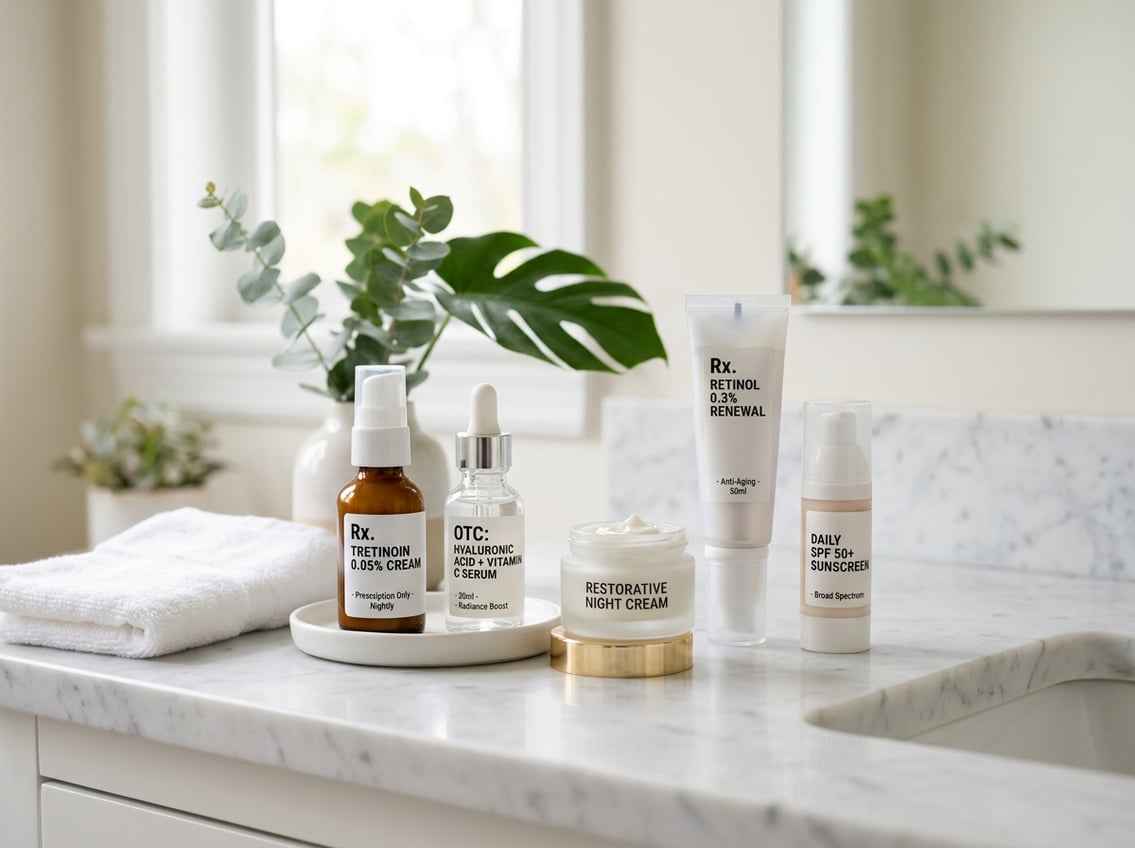
Retinoids work as vitamin A derivatives that transform your skin at the cellular level. The family ranges from gentle over-the-counter options to powerful prescription formulas, each with different conversion processes and strength levels.
What Are Retinoids?
Retinoids are compounds derived from vitamin A that work in your skin to speed up cell turnover and boost collagen production. They address multiple concerns including fine lines, wrinkles, acne, and uneven skin tone.
All retinoids are vitamin A derivatives, but they differ in how quickly they convert to retinoic acid, the active form your skin can use. Your skin must convert most retinoids through multiple steps before they become active.
This conversion process determines how fast you see results and how much irritation you might experience. Prescription retinoids like tretinoin skip this conversion entirely because they’re already in the active form of retinoic acid.
Vitamin A Derivatives in Skincare
Different vitamin A derivatives offer varying levels of effectiveness and gentleness. Retinyl palmitate sits at the mildest end, requiring multiple conversions before becoming active in your skin.
Retinol needs two conversion steps, making it stronger than retinyl palmitate but gentler than prescription options. Retinaldehyde (also called retinal) only needs one conversion step, which makes it work 11 times faster than retinol while causing less irritation.
Prescription retinoids include tretinoin, adapalene, and tazarotene. These prescription-strength options deliver the most dramatic results because they’re already in the form your skin can use immediately.
The Retinoid Strength Hierarchy
Weakest to Strongest:
- Retinyl palmitate (OTC)
- Retinol (OTC)
- Retinaldehyde/Retinal (OTC)
- Adapalene (Prescription)
- Tretinoin (Prescription)
- Tazarotene (Prescription)
Tretinoin is 20 times stronger than retinol and works faster for both acne and signs of aging. Your experience with retinoids should guide which strength you choose.
Beginners typically start with lower-strength retinol to build tolerance before moving up to retinaldehyde or prescription options. The stronger the retinoid, the faster you’ll see results, but you’ll also face more potential for redness, peeling, and dryness during the adjustment period.
Comparing Mechanisms of Action

Both retinol and tretinoin work by converting to retinoic acid in your skin, but they take different paths to get there. Tretinoin delivers immediate results because it’s already in the active form your skin needs, while retinol must go through conversion steps first.
Retinol Metabolism and Skin Conversion
When you apply retinol to your skin, it doesn’t work right away. Your skin cells must convert retinol through a two-step process to become retinoic acid, the active form that creates visible changes.
First, enzymes in your skin convert retinol into retinaldehyde. Then, another set of enzymes converts retinaldehyde into retinoic acid.
Each conversion step reduces the amount of active ingredient that reaches your skin cells. This explains why retinol is gentler than prescription options.
The conversion process acts as a buffer, slowing down how quickly retinoic acid builds up in your skin. You’ll experience fewer side effects, but you’ll also wait longer to see results.
Tretinoin’s Direct Activation
Tretinoin is prescription retinoic acid, which means it works immediately upon application. Your skin doesn’t need to convert it into another form.
This direct activation makes tretinoin significantly more powerful. Studies show it’s 20 times stronger than retinol because 100% of what you apply is already in the active form.
Your cells can use it right away to trigger changes. The trade-off is higher irritation risk.
Without the buffering effect of conversion steps, tretinoin can cause redness, peeling, and dryness more quickly than retinol.
How Retinoids Influence Cell Turnover and Collagen
Retinoic acid binds to specific receptors in your skin cells to trigger two main anti-aging effects. It speeds up cell turnover and stimulates collagen production.
For cell turnover, retinoic acid tells your skin to shed old, damaged cells faster and replace them with fresh ones. This process helps fade dark spots, smooth rough texture, and unclog pores.
For collagen stimulation, retinoic acid activates genes that produce new collagen fibers. It also blocks enzymes that break down existing collagen.
Recent research on topical interventions for facial photoaging found that isotretinoin, retinol, and tretinoin all significantly improved signs of aging through these mechanisms.
This dual action on both cell turnover and collagen remodeling is what makes retinoids effective for reducing fine lines and improving skin firmness.
Key Differences in Anti-Aging Performance
The conversion steps create measurable differences in how quickly you’ll see anti-aging results. Tretinoin typically shows visible improvements in 4 to 12 weeks because it works immediately on cell turnover and collagen production.
Retinol takes longer, usually 12 to 24 weeks, because your skin must convert it first. The difference in delivery technology matters more than concentration when comparing anti-aging performance.
Clinical studies show both ingredients improve wrinkles and skin firmness over time. But tretinoin produces faster and often more dramatic results because more retinoic acid reaches your cells.
Retinol offers a gentler path to similar benefits if you’re willing to wait longer and use it consistently.
Clinical Benefits and Indications

Both retinol and tretinoin target similar skin concerns, but tretinoin delivers faster and more dramatic results due to its prescription strength. Retinol offers a gentler approach with gradual improvements over time.
Addressing Fine Lines and Wrinkles
Tretinoin is proven to reduce fine lines and wrinkles more effectively than over-the-counter retinol products. It works by speeding up cell turnover and boosting collagen production in your skin.
You’ll typically see visible improvements in wrinkles within 8 to 12 weeks of consistent use. Retinol addresses the same concerns but requires more time to show results.
Since your skin must convert retinol into retinoic acid before it can work, the process takes longer. You might need 12 to 24 weeks of regular use to notice significant changes in fine lines.
Tretinoin is 20 times stronger than retinol, which explains the difference in how quickly they work. Both ingredients help combat photoaging caused by sun damage.
If you want faster results for moderate to severe wrinkles, tretinoin is your better option.
Improving Skin Texture and Hyperpigmentation
Both treatments improve skin texture by promoting faster cell renewal. Tretinoin smooths rough patches and evens out your complexion more quickly than retinol.
It’s particularly effective for treating dark spots and hyperpigmentation from sun damage or acne scars. You can expect tretinoin to fade hyperpigmentation within 3 to 6 months.
The medication increases cell turnover, pushing pigmented cells to the surface faster. Retinol works on the same issues but takes 6 to 12 months to produce comparable results.
Your skin texture will gradually become smoother with either option. Tretinoin may cause more initial irritation, including peeling and redness.
Retinol produces similar benefits with less disruption to your daily routine.
Treating Acne and Other Skin Concerns
Tretinoin is FDA-approved as an acne treatment and works by preventing clogged pores. It reduces both inflammatory and non-inflammatory acne lesions.
Your dermatologist might prescribe it for moderate to severe acne that hasn’t responded to other treatments. Retinol can help with mild acne but isn’t as powerful for active breakouts.
It helps prevent new blemishes by keeping your pores clear. You’ll need to use it consistently for several months to see improvements in acne-prone skin.
Tretinoin also shows benefits for other conditions like psoriasis in some cases. It’s primarily used to treat acne and signs of aging.
Retinol is best suited for prevention and maintenance rather than treating severe skin concerns.
Effectiveness for Mature Skin
Mature skin responds well to both ingredients, but tretinoin delivers more significant anti-aging benefits. It stimulates collagen and cell renewal more effectively than over-the-counter options.
Your skin becomes firmer and more resilient with regular use. If you’re over 50, you might prefer starting with retinol to avoid excessive irritation.
Mature skin tends to be drier and more sensitive. Retinol allows your skin to adjust gradually to vitamin A treatment.
Tretinoin remains the gold standard for reversing visible signs of aging in mature skin. You’ll see improvements in skin thickness, elasticity, and overall tone.
Your dermatologist can adjust the concentration based on how your skin responds to treatment.
Prescription Options Versus OTC Products
Prescription retinoids contain active retinoic acid and require a doctor’s approval. Over-the-counter retinol products use gentler vitamin A derivatives that convert into retinoic acid within your skin.
The main differences between these options involve strength, cost, and how easily you can access them.
Overview of Prescription Retinoids
Prescription retinoids work immediately because they contain retinoic acid in its active form. Your doctor can prescribe several different types based on your specific skin concerns.
Common Prescription Options:
- Tretinoin (brand names Retin-A, Retin-A Micro, Renova): The most widely prescribed retinoid for both acne and anti-aging
- Adapalene (Differin): Originally prescription-only, though a lower strength is now available over the counter
- Tazarotene (Tazorac): A potent option typically used for severe acne and psoriasis
Prescription tretinoin comes in different concentrations, typically ranging from 0.025% to 0.1%. Your dermatologist determines which strength suits your skin type and goals.
Prescription-strength products deliver faster and stronger results compared to over-the-counter alternatives. These medications require medical supervision because they can cause significant irritation, especially during the first few weeks of use.
Retinol Products Available Over the Counter
Over-the-counter retinol products provide a gentler approach to vitamin A skincare. You can buy these products without a prescription at drugstores, beauty retailers, and online.
Retinol must convert to retinoic acid through enzymatic processes in your skin. This conversion makes retinol less potent but also easier to tolerate for most people.
Where to Find Retinol:
- Serums and treatment products
- Night creams and moisturizers
- Eye creams for delicate skin areas
- Multi-step skincare systems
Over-the-counter skincare products with retinol allow you to start retinoid therapy without visiting a doctor. This accessibility makes retinol popular for people new to vitamin A treatments or those addressing mild skin concerns.
Typical Formulations and Strengths
Retinol formulations typically range from 0.25% to 1% in concentration. You should start with lower strengths and gradually increase as your skin builds tolerance.
| Product Type | Typical Strength | Availability |
|---|---|---|
| Prescription Tretinoin | 0.025% – 0.1% | Requires prescription |
| Retin-A Micro | 0.04% – 0.1% | Requires prescription |
| OTC Retinol | 0.25% – 1% | No prescription needed |
| Prescription Adapalene | 0.3% | Requires prescription |
Most retinol products combine the active ingredient with moisturizing ingredients to reduce irritation. These formulations often include hyaluronic acid, ceramides, or peptides.
Prescription retinoids come in creams, gels, and micro-formulations. Retin-A Micro uses a special delivery system that releases tretinoin gradually to minimize irritation while maintaining effectiveness.
Cost and Accessibility Factors
Prescription retinoids cost between $75 and $200 per tube without insurance. Your insurance may cover prescription tretinoin if your doctor prescribes it for acne treatment rather than anti-aging purposes.
Generic tretinoin typically costs less than brand-name versions like Retin-A or Renova. You need regular dermatologist appointments to maintain your prescription, which adds to the overall cost.
Over-the-counter retinol products range from $15 to $150 depending on the brand and formulation. You can purchase these products whenever you need them without appointment fees or prescription costs.
Retinol provides a more accessible path for people without health insurance or easy access to dermatology services. However, you may need to experiment with different products to find what works for your skin, potentially increasing your total spending.
Potential Side Effects and Safety Considerations
Both retinol and tretinoin can cause skin reactions, particularly when you first start using them. The main concerns include redness, peeling, increased sun sensitivity, and changes to your skin’s protective barrier.
Skin Irritation and Sensitivity
You may experience redness, dryness, and flaking when you begin using retinoids. These symptoms are more common and intense with prescription tretinoin because it’s 20 times stronger than retinol.
Common irritation symptoms include:
- Redness and warmth
- Dry, flaky patches
- Mild burning or stinging
- Increased skin sensitivity
The severity of skin irritation depends on the strength of the product you use. Over-the-counter retinol products typically cause milder reactions.
Prescription tretinoin often triggers more noticeable side effects during the first few weeks. You can reduce irritation by starting slowly.
Apply the product just 2-3 times per week initially. Once your skin adjusts, you can gradually increase to nightly use.
Photosensitivity and Sun Protection
Retinoids make your skin more vulnerable to sun damage. This photosensitivity happens because these products increase cell turnover, exposing newer, more delicate skin cells.
You need to wear sunscreen every day when using retinol or tretinoin. Choose a broad-spectrum formula with SPF 30 or higher.
Apply it even on cloudy days and during winter months. Sun exposure while using retinoids can lead to:
- Severe sunburn
- Increased pigmentation
- Reduced effectiveness of treatment
- Higher risk of sun damage
Most dermatologists recommend applying retinoids at night. This timing helps protect your skin from UV exposure while the product works.
Impact on the Skin Barrier
Your skin barrier acts as a protective shield against irritants and water loss. Retinoids can temporarily weaken this barrier, especially during the adjustment period.
A compromised skin barrier leads to increased water loss and sensitivity. You may notice your skin feels tight or uncomfortable.
Products that normally don’t bother you might suddenly cause stinging. To protect your skin barrier, use a gentle cleanser and apply a rich moisturizer.
Avoid harsh exfoliants and other active ingredients like AHAs or BHAs when starting retinoids. Your skin needs time to build tolerance before you combine multiple active treatments.
Considerations for Sensitive Skin
If you have sensitive skin, you face a higher risk of adverse reactions. Starting with gentler retinol products may work better for you than jumping straight to prescription tretinoin.
Look for retinol formulas with soothing ingredients like niacinamide or ceramides. These additions help calm your skin and reduce irritation.
You might also consider using a lower concentration initially. People with conditions like rosacea or eczema should consult a dermatologist first.
These skin conditions require extra caution when introducing retinoids. Your doctor can recommend the safest approach and monitor your progress.
Usage Tips and Tolerance Building
Starting with a low concentration and gradually increasing frequency helps your skin adjust to retinol or tretinoin while minimizing irritation. Strategic application methods and smart ingredient pairings can further reduce side effects during the adjustment period.
How to Start Retinol or Tretinoin Safely
Begin with topical retinoids just once or twice per week for the first two to three weeks. This gives your skin time to build tolerance without overwhelming it.
Apply a pea-sized amount to clean, completely dry skin. Wait at least 20 minutes after washing your face before applying tretinoin or retinol.
Damp skin absorbs products more quickly, which increases the risk of irritation. Start with lower concentrations when possible.
For retinol, begin with 0.25% to 0.5%. For prescription tretinoin, ask your doctor about starting with 0.025% cream rather than stronger formulations.
You can slowly increase to every other night after two weeks if your skin tolerates it well. Move to nightly use only after four to six weeks of consistent application without significant peeling or redness.
The Sandwich Method and Buffering
The sandwich method involves applying moisturizer before and after your retinoid to reduce irritation. Apply a thin layer of moisturizer to dry skin first, then your retinoid, then another layer of moisturizer on top.
This technique slows down how quickly topical tretinoin penetrates your skin. While it may slightly reduce effectiveness, it helps many people tolerate stronger retinoids during the initial weeks.
You can also use buffering by mixing your retinoid with moisturizer before application. This dilutes the concentration and spreads it more evenly across your face.
As your skin builds tolerance over several weeks, you can gradually reduce buffering. Try applying moisturizer only after your retinoid, then eventually use the retinoid alone on bare skin.
Delivery Technology and Formulation Advances
Modern retinol formulations use encapsulation technology to control how the ingredient releases into your skin. These time-release systems deliver the active ingredient more slowly, which reduces irritation while maintaining effectiveness.
Microencapsulated retinol wraps the molecule in a protective coating that breaks down gradually. This newer delivery technology allows higher concentrations of retinol to be used with less redness and peeling than traditional formulations.
Look for products labeled as “encapsulated” or “slow-release” if you have sensitive skin. These advanced formulations cost more but often make the difference between tolerating a retinoid and having to stop use due to irritation.
Pairing with Other Ingredients (e.g., Cerave, Niacinamide)
CeraVe moisturizers work well with topical retinoids because they contain ceramides and hyaluronic acid that repair your skin barrier. Apply CeraVe Moisturizing Cream after your retinoid to lock in hydration and reduce flaking.
Niacinamide pairs excellently with both retinol and tretinoin. This ingredient reduces inflammation and strengthens your skin barrier, which helps counteract retinoid irritation.
You can use niacinamide serums in the morning or layer them under your retinoid at night. Avoid combining retinoids with these ingredients on the same night:
- Vitamin C (use in morning instead)
- Alpha hydroxy acids like glycolic acid
- Beta hydroxy acids like salicylic acid
- Benzoyl peroxide (can deactivate tretinoin)
You can use gentle ingredients alongside your retinoid, including hyaluronic acid, peptides, and squalane. These support your skin without causing additional irritation during the adjustment period.
Choosing the Best Option for Your Skin
The main difference between retinol and tretinoin comes down to strength and accessibility. Your choice depends on your specific skin concerns and tolerance levels.
Understanding how these products work and what your skin can handle will help you pick the right one.
Difference Between Retinol and Tretinoin
Tretinoin is already in the active form of retinoic acid. It works directly on your skin cells without any conversion steps.
This makes it 10-20 times more potent than retinol.
Retinol needs two conversion steps before it becomes retinoic acid. Your skin enzymes convert it first to retinaldehyde, then to retinoic acid.
This makes it weaker but also gentler.
You need a prescription to get tretinoin. Your doctor will evaluate your skin and decide if you’re a good candidate.
Retinol is available over the counter at drugstores and beauty retailers. You can buy it without seeing a doctor.
The difference in retinoid strength also affects side effects. Tretinoin causes more dryness, redness, and peeling, especially when you first start using it.
Retinol produces similar but milder side effects that are easier to tolerate.
Assessing Your Skin Goals and Needs
Start with retinol if you:
- Have sensitive skin that gets irritated easily
- Are new to retinoids and haven’t used them before
- Want to treat your neck and chest, where skin is thinner
- Experience redness or have a compromised skin barrier
- Are dealing with mature skin after menopause when the barrier weakens
Consider tretinoin if you:
- Have persistent acne that doesn’t respond to other treatments
- Want faster results for significant signs of aging
- Can commit to careful sun protection every single day
- Have tried retinol without seeing enough improvement
- Don’t have extremely sensitive or reactive skin
You cannot use tretinoin if you’re pregnant or breastfeeding. This applies to retinol too.
Your age and skin condition matter. Younger skin with active acne often tolerates tretinoin well.
Mature skin with thinning and sensitivity typically does better with gentler retinol products.
Transitioning Between Products
Start any retinoid slowly at two to three nights per week. This gives your skin time to adjust and build tolerance.
If you’re moving from retinol to tretinoin, don’t make the switch overnight. Use your retinol until you finish the bottle, then wait a few days before starting tretinoin.
Your skin needs a brief break between products.
Apply only a pea-sized amount to your entire face after cleansing. More product doesn’t give better results—it just increases irritation.
You can use the sandwich method to reduce side effects:
- Apply moisturizer to clean skin
- Wait a few minutes, then apply your retinoid
- Lock it in with another layer of moisturizer
Never use tretinoin and retinol at the same time. Using multiple retinoid products together increases irritation without improving results.
Some people alternate between tretinoin and retinol if daily tretinoin is too harsh. You might use tretinoin three nights per week and retinol on the other nights.
Always check with your dermatologist before trying this approach.
Watch for excessive dryness, burning, or persistent redness. These signs mean you need to cut back on frequency or switch to a gentler option.
Frequently Asked Questions
Retinol and tretinoin raise common questions about strength differences, effectiveness timelines, and which option works best for specific aging concerns. Understanding how these vitamin A derivatives compare helps you make informed decisions about your skin care routine.
What is the difference between retinol and tretinoin for anti-aging results?
The main difference is that tretinoin is already in its active form as retinoic acid, while retinol needs to convert to retinoic acid in your skin before it can work.
This conversion process makes retinol gentler but less potent.
Tretinoin delivers faster and more dramatic anti-aging results because it starts working immediately upon application. You can expect to see improvements in fine lines, wrinkles, and skin texture within three months of regular use.
Retinol produces more gradual results over a longer period. Your skin needs time to convert retinol into its active form, which slows down the process but also reduces the risk of irritation.
Both ingredients stimulate collagen production and increase cell turnover. However, tretinoin does this more aggressively, making it better suited for moderate to severe aging signs.
Is over-the-counter retinol as effective as prescription tretinoin for wrinkles?
Over-the-counter retinol is less effective than prescription tretinoin for treating wrinkles. Tretinoin is 10 to 20 times more potent than retinol products you can buy without a prescription.
Retinol can improve fine lines and mild wrinkles with consistent use over several months. You may need to use it for six months or longer to see noticeable results.
Tretinoin works faster and produces more significant improvements in deeper wrinkles and skin texture. The active retinoic acid penetrates your skin more effectively and triggers stronger cellular responses.
If you have mild aging concerns or sensitive skin, retinol may provide adequate results. For more advanced wrinkles and significant photodamage, tretinoin typically delivers better outcomes.
Which works better for hyperpigmentation: retinol or a prescription retinoid?
Prescription retinoids like tretinoin work better for hyperpigmentation than over-the-counter retinol. The higher potency allows tretinoin to reverse photodamage more effectively, including uneven pigmentation and dark spots.
Tretinoin accelerates cell turnover more rapidly, which helps fade dark spots and sun damage faster. You can expect to see improvements in skin tone and pigmentation within a few months of regular use.
Retinol can also help with hyperpigmentation, but the results take longer to appear. The gentler action means you need more patience to see your dark spots lighten.
Both ingredients promote an even complexion by bringing new skin cells to the surface. However, tretinoin’s stronger formulation makes it the preferred choice for stubborn hyperpigmentation that hasn’t responded to other treatments.
How strong is tretinoin 0.025% compared with typical over-the-counter retinol products?
Tretinoin 0.025% is significantly stronger than typical over-the-counter retinol products. Even at this lower prescription concentration, tretinoin is 10 to 20 times more potent than most retinol formulations.
Most over-the-counter retinol products contain concentrations between 0.25% and 1%. These percentages don’t directly compare to tretinoin because retinol requires conversion to become active.
The 0.025% tretinoin concentration is often prescribed as a starting strength for people new to prescription retinoids. Despite being the lowest available prescription dose, it still delivers more powerful results than stronger retinol products.
Your skin will likely experience more noticeable effects from tretinoin 0.025% than from a 1% retinol product. The difference in molecular activity and immediate availability gives tretinoin a clear advantage in potency.
What age is appropriate to start using a prescription retinoid for anti-aging?
You can start using a prescription retinoid for anti-aging in your late twenties or early thirties. Many dermatologists recommend beginning tretinoin when you first notice early signs of aging like fine lines or sun damage.
Starting in your twenties with a gentler retinol approach allows you to build tolerance gradually. You can then transition to prescription strength tretinoin when your skin concerns become more pronounced.
There is no single correct age to begin prescription retinoids. Your individual skin condition, aging signs, and goals matter more than your specific age.
Some people in their twenties use tretinoin for acne treatment and benefit from the anti-aging effects as well. Others wait until their thirties or forties when they want more aggressive intervention for visible aging signs.
How do side effects and irritation compare between retinol and prescription tretinoin?
Prescription tretinoin causes more severe side effects and irritation than retinol. You can expect significant dryness, peeling, and burning sensations during the first few weeks of tretinoin use.
Retinol produces milder side effects because of its gentler formulation. You may experience some dryness and slight peeling, but these effects are typically less intense and easier to manage.
Both products increase your skin’s sensitivity to the sun. However, tretinoin creates dramatically higher photosensitivity, requiring strict sun protection and avoidance to prevent severe sunburn.
Tretinoin often causes a purging period where your acne temporarily worsens as underlying comedones surface faster. Retinol can also cause purging, but the effect is usually less pronounced.
You cannot use tretinoin during pregnancy or nursing due to potential risks. Retinol also carries pregnancy warnings, though the risks are considered lower with over-the-counter concentrations.