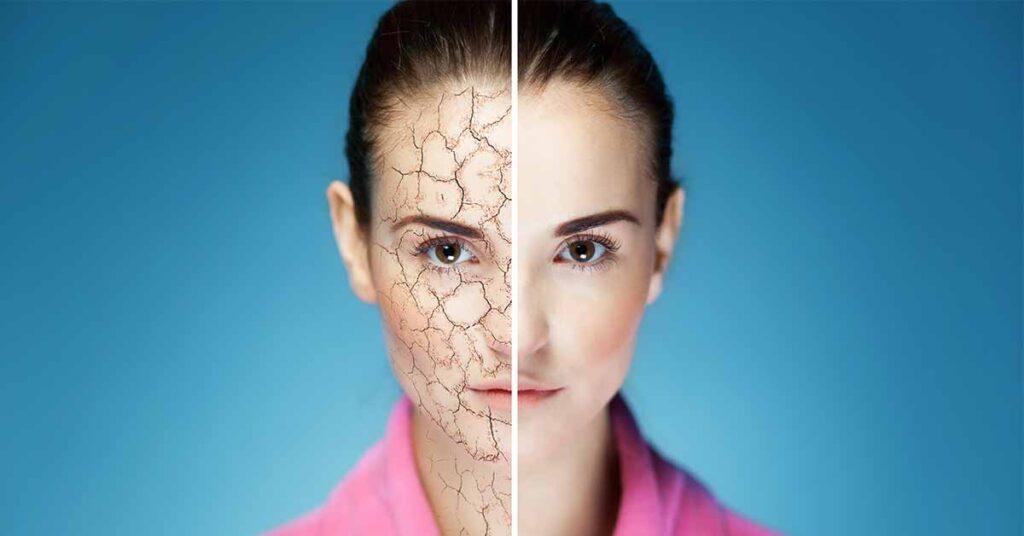
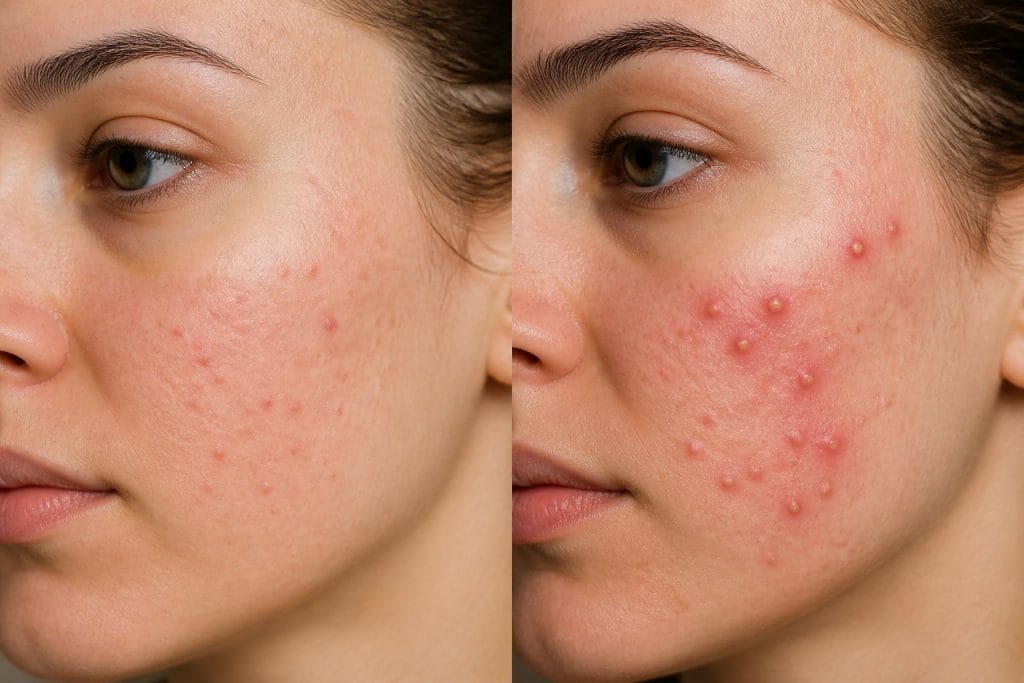
You might think all acne is the same, but that small itchy bump on your forehead could be something completely different from regular pimples. Fungal acne, also known as Malassezia folliculitis, is caused by yeast overgrowth in your hair follicles, while bacterial acne (acne vulgaris) results from clogged pores filled with oil and bacteria. The two conditions look nearly identical, but they need opposite treatments.
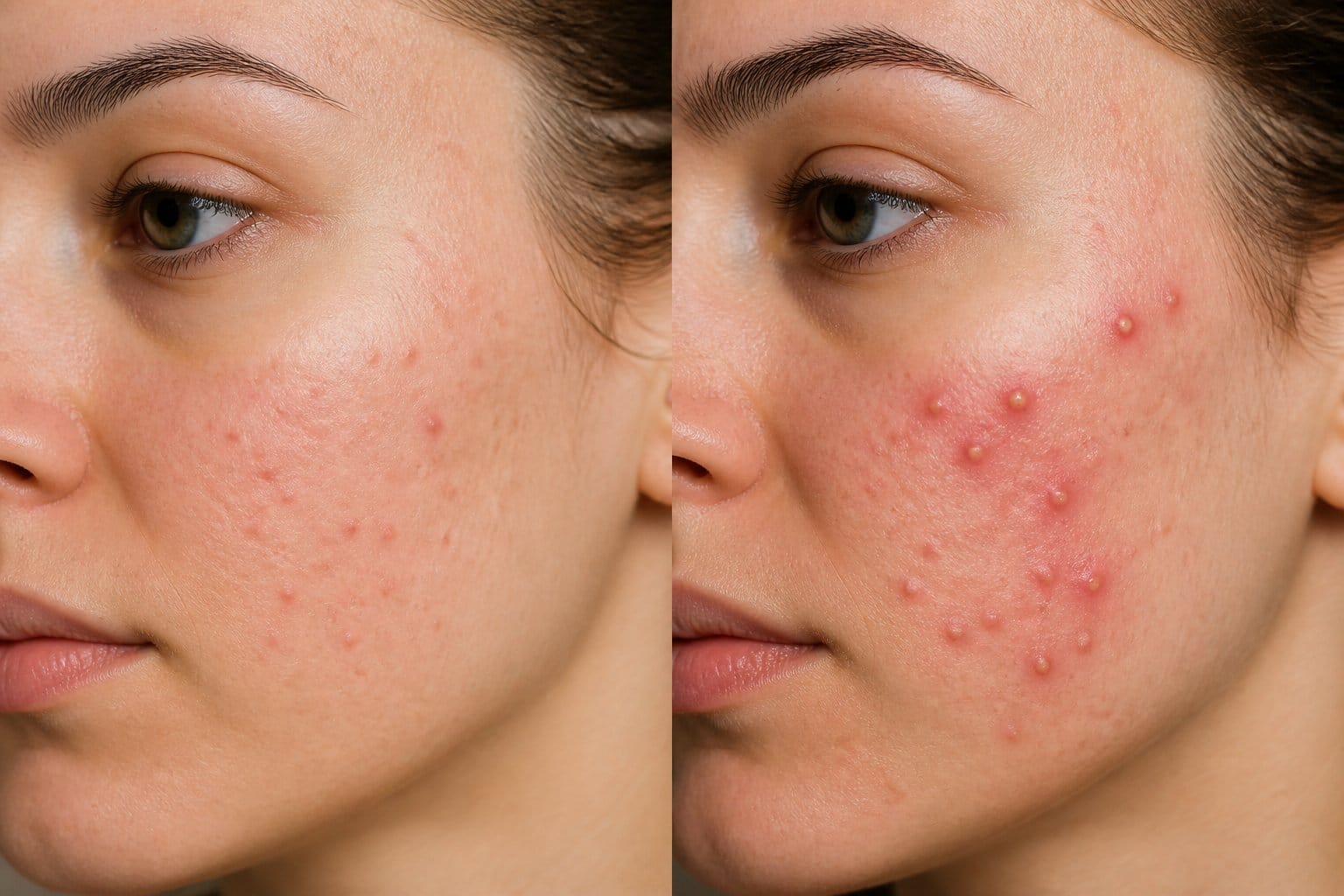
This mix-up explains why your breakouts might not respond to typical acne products. Using the wrong treatment can make your skin worse instead of better. Understanding whether you have fungal or bacterial acne is the first step to clearing your skin.
In this guide, you’ll learn how to tell these two conditions apart, what triggers each one, and which treatments actually work. We’ll cover the science behind Malassezia folliculitis, walk through proper diagnosis methods, and give you practical strategies to prevent future breakouts. By the end, you’ll know exactly how to approach your specific skin concern.
Core Differences Between Fungal and Bacterial Acne
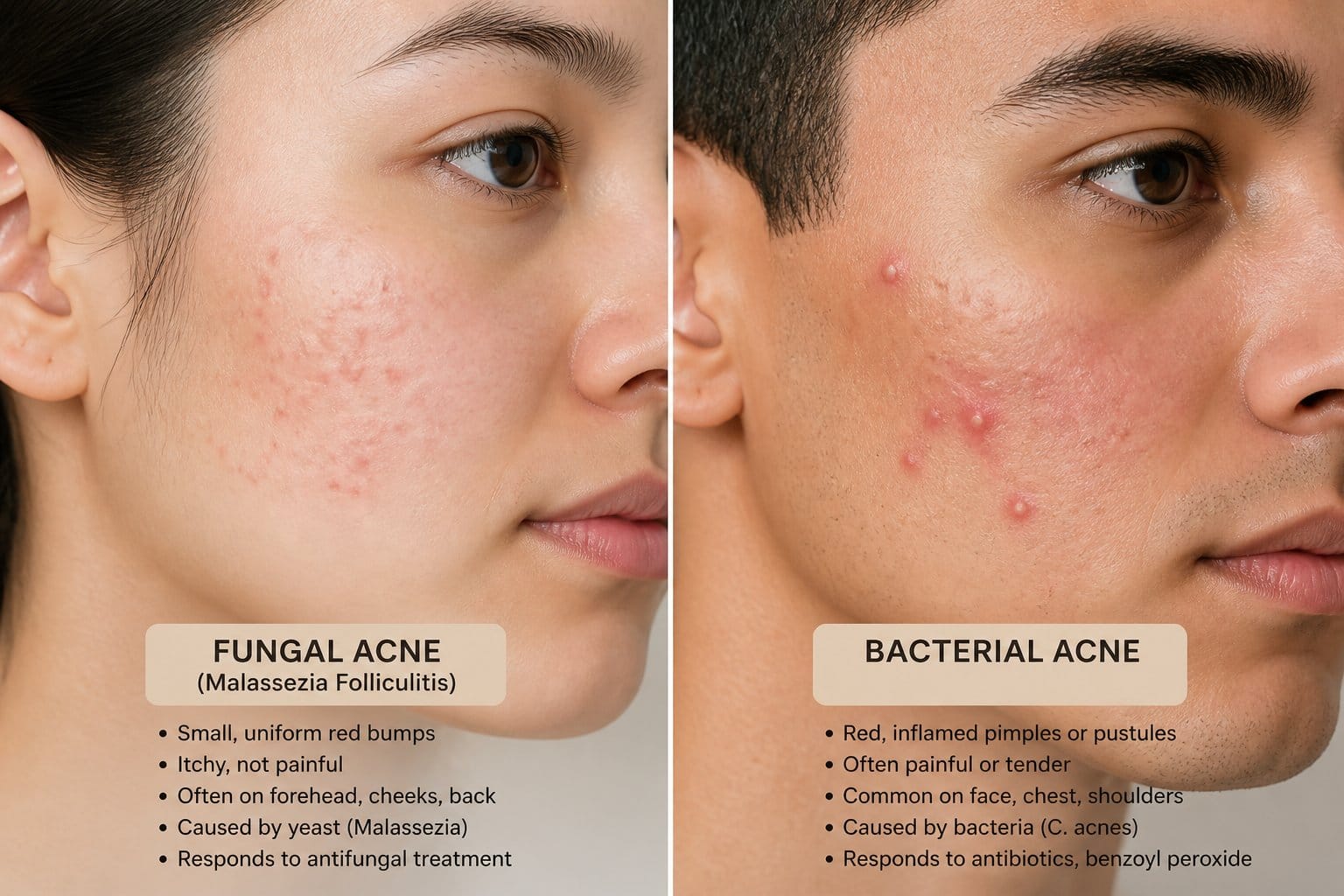
Fungal acne and bacterial acne stem from completely different organisms and require opposite treatment approaches. The causes, appearance, and location of these breakouts help you identify which type is affecting your skin.
Distinct Causes and Triggers
Bacterial acne, also called acne vulgaris, happens when Cutibacterium acnes (formerly Propionibacterium acnes) bacteria multiply inside your hair follicles. This bacterium normally lives on your skin but causes problems when your sebaceous glands produce too much oil, dead skin cells accumulate, and pores become blocked.
Fungal acne is actually Malassezia folliculitis or pityrosporum folliculitis, which occurs from yeast overgrowth rather than bacteria. The Malassezia yeast naturally exists on your skin but multiplies rapidly in warm, humid conditions. Thick creams, heavy oils, excessive sweating, and compromised immune function all promote Malassezia yeast growth.
Hormonal changes, genetics, and sebaceous gland activity drive bacterial acne development. Fungal acne responds to environmental factors like moisture and occlusive products that trap heat against your skin.
Key Visual Symptoms
Bacterial acne produces varied lesions including:
- Comedones (blackheads and whiteheads)
- Pustules with white or yellow centers
- Papules (raised red bumps)
- Cysts and nodules (deep, painful lumps)
- Lesions of different sizes and stages
Fungal acne creates a distinctive pattern:
- Small, uniform bumps of similar size
- Itchy or tender pustules
- Clusters of bumps that look alike
- No blackheads or whiteheads present
The itchiness is a key difference. Fungal acne typically feels itchy, while bacterial acne usually does not itch but may feel painful or tender to touch.
Typical Locations on the Body
Bacterial acne commonly appears on your T-zone, which includes your forehead, nose, and chin. You may also get breakouts on your jawline, cheeks, and back. These areas have more sebaceous glands that produce oil.
Fungal acne favors your chest, back, shoulders, and forehead. These body areas trap more sweat and heat, creating ideal conditions for Malassezia yeast. Your upper arms may also develop fungal acne breakouts.
The pattern matters too. Bacterial acne appears as scattered individual lesions across affected areas. Fungal acne forms tight clusters of uniform bumps in concentrated patches.
Fungal vs Bacterial Acne: Summary Table
| Feature | Fungal Acne | Bacterial Acne |
|---|---|---|
| Cause | Malassezia yeast overgrowth | C. acnes bacteria in follicles |
| Appearance | Small, uniform bumps | Mixed lesion types and sizes |
| Comedones | None present | Blackheads and whiteheads common |
| Itching | Often itchy or tender | Usually not itchy |
| Location | Chest, back, shoulders, forehead | T-zone, jawline, cheeks, back |
| Pattern | Clustered, uniform patches | Scattered individual lesions |
| Triggers | Humidity, sweat, occlusive products | Hormones, oil production, dead skin |
Understanding Malassezia Folliculitis
Malassezia folliculitis happens when a specific type of yeast that lives on everyone’s skin grows out of control inside your hair follicles. This yeast overgrowth creates an infection that looks like acne but needs different treatment to clear up.
Malassezia Yeast and Skin Health
Malassezia is a type of yeast that naturally lives on your skin‘s surface. It feeds on the oils your sebaceous glands produce. Under normal conditions, this yeast exists in balance with other microorganisms on your skin.
Problems start when malassezia multiplies too quickly. The yeast breaks down sebum from your sebaceous gland into fatty acids that irritate your hair follicles. This creates the inflammatory response you see as fungal acne.
Your skin normally keeps malassezia populations under control. But certain factors can disrupt this balance and allow the yeast to overgrow. Once malassezia enters your hair follicles in large numbers, it triggers pityrosporum folliculitis.
The same yeast can also cause other skin conditions like seborrheic dermatitis. This shows how malassezia behaves differently depending on where it grows on your body.
Risk Factors and Triggers
Several conditions create the perfect environment for malassezia to multiply. Hot and humid weather encourages yeast growth because malassezia thrives in warm, moist conditions. Excessive sweating traps moisture against your skin and feeds the yeast.
Oily skin provides more food for malassezia since the yeast feeds on sebum. People with overactive sebaceous glands face higher risk of developing malassezia folliculitis.
Tight clothing blocks airflow and traps sweat against your skin. This creates a breeding ground for yeast overgrowth. Wearing workout clothes for too long after exercise increases your risk.
Common triggers include:
- Antibiotics that kill bacteria but let yeast flourish
- Immunosuppressant medications
- Occlusive skincare products
- Fatty acids and oils in skincare products
Ingredients that feed malassezia include many common skincare components. Certain oils, esters, and fatty acids provide nutrition for the yeast and worsen the condition.
Symptoms Unique to Fungal Acne
Malassezia folliculitis creates uniform bumps that look remarkably similar to each other. These small, red bumps appear in clusters rather than scattered randomly across your face. The bumps typically measure 1-2 millimeters in diameter.
Itchiness sets fungal acne apart from bacterial acne. Your skin feels irritated and you want to scratch the affected areas. Bacterial acne rarely causes this level of itching.
The breakouts appear in specific locations. You’ll notice them on your forehead, chest, back, and shoulders. These areas have high concentrations of sebaceous glands and tend to trap sweat.
The bumps don’t have whiteheads or blackheads like regular acne. They look more like small, raised dots that feel rough when you touch them. Traditional acne treatments won’t help these itchy bumps and may actually make them worse.
Your skin may feel oily in the affected areas. The bumps persist for weeks without coming to a head or draining like bacterial pimples do.
Causes and Triggers for Both Conditions
Bacterial acne stems from clogged pores filled with sebum and dead skin cells, while fungal acne develops when Malassezia yeast overgrows in hair follicles. Your hormones, the products you apply, and the health of your skin barrier all play different roles in triggering each condition.
Hormonal and Environmental Influences
Your sebaceous glands produce sebum in response to hormonal signals, particularly androgens like testosterone. When these hormones surge during puberty, menstruation, or stress, your sebum production increases. This excess oil combines with dead skin cells to create clogged pores, the foundation of bacterial acne.
Hormonal acne typically appears along your jawline, chin, and lower cheeks. The T-zone (forehead, nose, and chin) also becomes more prone to breakouts because it contains a higher concentration of sebaceous glands.
Heat and humidity affect fungal acne differently. Malassezia yeast thrives in warm, moist environments, which is why breakouts worsen in summer or after exercise. Sweating itself doesn’t cause the problem, but staying in damp clothing traps moisture against your skin and creates ideal conditions for yeast overgrowth.
Your clothing choices matter more than you might think. Tight, non-breathable fabrics trap sweat and heat against your skin. Showering after sweating removes excess moisture and limits the time Malassezia has to multiply in that warm, damp environment.
Product Ingredients and Lifestyle
Many hair products and skincare ingredients feed Malassezia yeast because the organism consumes specific fatty acids. Coconut oil, which contains high levels of lauric acid, is one of the most common acne triggers for fungal breakouts. Olive oil and argan oil also contain oleic acid that Malassezia feeds on.
Other problematic ingredients include:
- Isopropyl myristate – Used in moisturizers and foundations
- Polysorbate 60 and polysorbate 80 – Common emulsifiers in creams
- Cetyl alcohol – Despite the name, it’s a fatty alcohol that can trigger overgrowth
- Glyceryl stearate – Found in many lotions and cleansers
Mineral oil is generally safe for fungal acne because Malassezia cannot metabolize it. The same goes for simpler oils like squalane.
For bacterial acne, comedogenic ingredients clog your pores rather than feeding organisms. Heavy oils and butters can trap dead skin cells inside follicles, creating the plugs where bacteria multiply.
Some fermented ingredients like galactomyces and saccharomyces ferment can worsen fungal acne in sensitive individuals, though research on this remains limited.
Skin Barrier and Microbiome Balance
Your skin barrier protects against both bacterial and fungal overgrowth when it functions properly. A damaged barrier allows more water loss, which triggers your sebaceous glands to produce extra sebum as compensation. This excess oil creates more fuel for both bacteria and yeast.
Your skin microbiome contains beneficial bacteria that compete with Malassezia for resources and space. When you take oral antibiotics for bacterial acne, you kill these helpful bacteria along with the harmful ones. Studies show that up to 75% of people with Malassezia folliculitis had recently used antibiotics, particularly those on long-term treatment.
This disruption explains why some people develop fungal acne while treating bacterial acne. The antibiotics clear the bacterial infection but remove the competition that kept yeast populations in check. Your skin becomes vulnerable to a different type of overgrowth entirely.
Immunosuppression also weakens your body’s ability to regulate the microorganisms on your skin. Corticosteroids like prednisone, medications after organ transplants, and conditions like HIV all reduce immune function and make fungal overgrowth more likely.
Identifying Fungal Acne: Diagnosis and Self-Assessment
Distinguishing fungal acne from bacterial acne requires attention to specific visual patterns, physical sensations, and sometimes professional testing. The location of uniform bumps, presence of itching, and lack of typical comedones can point toward malassezia rather than c. acnes infection.
Differentiation with Visual and Sensory Clues
Fungal acne appears as small, uniform bumps that cluster together on your skin. These bumps stay roughly the same size, unlike bacterial acne which produces varied lesions including pustules, cysts, and comedones.
The most telling sign is itchiness. Fungal acne causes clusters of small, itchy, red bumps while bacterial acne rarely itches. If you feel the urge to scratch your breakout, malassezia folliculitis is more likely.
Location matters for identification. Fungal acne commonly shows up on your chest, back, and shoulders. It also appears on your forehead and around your hairline where sweat and oil collect.
Your breakout may worsen in hot, humid conditions or after sweating. If regular acne treatments haven’t worked after several weeks, you might be dealing with a fungal issue instead of bacterial.
Medical Testing and Diagnostic Tools
A dermatologist performs a skin examination to check the pattern and appearance of your bumps. They look for the uniform size and distribution that suggests fungal overgrowth.
The KOH scrape test provides definitive diagnosis. Your dermatologist scrapes a small sample from affected areas and treats it with potassium hydroxide solution. Under a microscope, this reveals malassezia yeast cells.
Some dermatology practices use a Wood’s lamp, which shows fluorescence patterns that differ between fungal and bacterial infections. A culture test can also identify the specific organism causing your breakout.
Biofilm disruption tests may be ordered if your condition doesn’t respond to initial treatments. These tests check whether protective layers around microorganisms are preventing medication from working.
When to See a Dermatologist
You should schedule a dermatology appointment if over-the-counter antifungal treatments don’t improve your skin after two weeks. Self-diagnosis can lead to using the wrong products that make the condition worse.
Self-diagnosis can make fungal acne worse by delaying proper treatment. See a professional if your bumps spread, become more inflamed, or cause significant discomfort.
Your dermatologist visit becomes urgent if you develop signs of secondary infection like increased redness, warmth, or oozing. A professional can distinguish between fungal acne and conditions like bacterial folliculitis or other skin infections that require different treatments.
Treatment Strategies for Fungal Acne
Antifungal medications are the only treatments that clear fungal acne, and combining them with specific lifestyle changes helps prevent it from coming back. The approach depends on how severe your breakouts are and whether topical options alone can manage the overgrowth.
Topical and Oral Antifungal Options
Topical antifungal treatments work well for mild to moderate cases. Ketoconazole 2% shampoo is the most effective option you can get without a prescription. Apply it to affected areas, leave it on for 5 to 10 minutes, then rinse thoroughly. The contact time allows the medication to penetrate the hair follicles where the yeast lives.
Use ketoconazole daily during active breakouts. Once your skin clears, switch to maintenance use 1-2 times per week to prevent recurrence.
Selenium sulfide and zinc pyrithione are gentler alternatives found in dandruff shampoos that also treat fungal acne. They work slower than ketoconazole but cause less dryness and irritation. You can also find antifungal creams with clotrimazole or miconazole, though these are typically less effective than medicated washes for body acne.
Oral antifungal medications become necessary for severe or widespread cases that don’t respond to topical treatment. Your doctor may prescribe fluconazole or itraconazole. These systemic medications clear the infection faster but require monitoring because they can affect liver function.
Lifestyle Adjustments and Prevention
Shower immediately after sweating. The longer sweat sits on your skin, the more opportunity yeast has to multiply in that warm, moist environment.
Wear breathable fabrics like cotton instead of synthetic materials that trap moisture against your skin. Change out of gym clothes and swimwear right after exercise or swimming.
Use gentle cleansing products that don’t strip your skin. Harsh soaps can disrupt your skin barrier and trigger more oil production, which feeds the yeast. Skip heavy oils and thick moisturizers on areas prone to fungal acne outbreaks since Malassezia feeds on certain fatty acids.
Regular exfoliation helps but use it carefully. Chemical exfoliants like salicylic acid can remove dead skin cells without the friction of physical scrubs, but they won’t kill the yeast itself.
Managing Recurrences
Maintenance treatment prevents fungal acne from coming back after you clear it. Continue using your antifungal wash 1-2 times weekly even after bumps disappear. This keeps yeast populations under control without needing daily treatment.
Track your flare patterns. If breakouts consistently appear during summer or after specific activities, you can adjust your routine before problems start. Apply your antifungal wash preventively during high-risk periods.
If you need antibiotics for bacterial acne or another infection, ask your doctor about taking a preventive antifungal at the same time. This protects against the yeast overgrowth that antibiotics can trigger.
Watch for signs that your treatment approach needs adjustment. If bumps return quickly after stopping treatment or spread to new areas, you may need prescription-strength antifungals or a longer treatment course.
Approaches to Bacterial Acne Management
Bacterial acne requires treatments that target clogged pores, reduce inflammation, and control bacteria. The right approach depends on how severe your acne is and how your skin responds to different medications.
Topical and Oral Medications
Benzoyl peroxide kills the bacteria that cause acne and helps unclog pores. You can find it in strengths from 2.5% to 10%, though lower concentrations often work just as well with less irritation. It works fast, usually showing results within a few weeks.
Salicylic acid breaks down dead skin cells and clears out clogged pores. It’s gentler than benzoyl peroxide and works well for mild acne, especially blackheads and whiteheads.
Retinoids prevent pores from getting blocked in the first place. They also speed up cell turnover and reduce inflammation. Over-the-counter options include adapalene, while stronger versions like tretinoin require a prescription.
Topical antibiotics like clindamycin reduce bacteria on your skin. Doctors usually pair them with benzoyl peroxide to prevent antibiotic resistance.
For moderate to severe acne, oral antibiotics may be necessary. Doxycycline and minocycline are the most common choices. They reduce inflammation and bacteria throughout your body. You typically take them for a few months, not long-term, because extended use can disrupt your skin’s bacterial balance and potentially lead to fungal acne as a secondary condition.
Isotretinoin treats severe acne that hasn’t responded to other options. It shrinks oil glands and provides long-term clearing for many people. The treatment requires close monitoring due to potential side effects.
Role of Skin Care and Non-comedogenic Products
Your daily skin care routine supports your acne treatment. Non-comedogenic products won’t clog your pores, which is critical when you’re already dealing with breakouts.
Look for moisturizers with niacinamide and ceramides. Niacinamide reduces inflammation and controls oil production. Ceramides repair your skin barrier, which often gets damaged from acne treatments.
Squalane is a lightweight oil that hydrates without clogging pores. It’s a good option if retinoids or benzoyl peroxide are making your skin dry.
Sulfur draws out oil and has mild antibacterial properties. It’s gentler than many other acne treatments and works well for sensitive skin.
Avoid heavy oils, thick creams, and products with coconut oil or cocoa butter. These ingredients can block pores and make acne worse.
When to Consider Advanced Therapies
If your acne hasn’t improved after three months of consistent treatment, you need a different approach. Persistent breakouts despite proper antibacterial treatment might mean you need stronger medication or that you’re dealing with a different type of acne entirely.
Severe cystic acne that causes scarring requires immediate intervention. Waiting too long increases the risk of permanent scarring that’s difficult to treat later.
If you’ve developed new breakouts while taking antibiotics, you might have a mixed infection that needs both antibacterial and antifungal treatment. A dermatologist can test your skin to confirm what’s causing your breakouts.
Advanced options include hormonal treatments for women, such as birth control pills or spironolactone, which reduce oil production. Light-based therapies and chemical peels can also help when medications alone aren’t enough.
Common Mistakes and Overlapping Cases
Many people treat one type of acne while actually having both, or they misdiagnose their condition entirely and use treatments that make things worse. Getting the wrong diagnosis means using antibiotics when you need antifungals, or treating yeast when bacteria is the real problem.
Mixed Infections and Dual-Approach Treatment
You can have both fungal and bacterial acne at the same time. This happens most often when you’ve been on antibiotics for bacterial acne for several weeks or months. The antibiotics kill the bacteria causing your acne, but they also wipe out beneficial bacteria on your skin that normally keep Malassezia yeast in check.
Once that bacterial competition disappears, the yeast population explodes. You end up with the uniform, itchy bumps of fungal acne alongside the blackheads and inflamed cysts of bacterial acne.
Signs you might have both conditions:
- Some areas respond to acne treatment while others don’t
- You have blackheads or cysts mixed with clusters of identical small bumps
- Your skin got worse or developed new types of breakouts after starting antibiotics
- Some spots itch while others don’t
Treating mixed infections requires both antibacterial action and antifungal treatment. Your skin microbiome needs both problems addressed, not just one. A dermatologist can prescribe the right combination based on which condition is more severe.
Risks of Misdiagnosis and Ineffective Care
Using the wrong treatment doesn’t just waste time. It can actively make your skin worse. When you treat fungal acne with antibiotics, you kill more beneficial bacteria and give the yeast even more room to grow. Your breakouts spread instead of clearing.
The differences between fungal and bacterial acne matter because the treatments work in opposite ways. Antibiotics have zero effect on yeast. Antifungals don’t touch bacteria. If you’re applying benzoyl peroxide to Malassezia folliculitis, you’re treating a condition that isn’t there.
Some people cycle through months of unsuccessful treatment because they assume all small bumps are regular acne. They try stronger doses, add more products, and strip their skin barrier in the process. The biofilm disruption from harsh products can temporarily improve things, but the underlying yeast infection stays active.
If your breakouts haven’t responded to standard acne care after six to eight weeks, stop assuming it’s bacterial acne. See a dermatologist for testing instead of trying more products.
Tips for Preventing Recurrence
Keeping fungal acne from coming back requires consistent changes to your daily routine and careful attention to the products you use on your skin. The right habits and product choices create an environment where yeast cannot overgrow.
Daily Habits for Clear Skin
You need to shower immediately after sweating to prevent yeast from multiplying in warm, moist conditions. Change out of workout clothes and swimsuits as soon as possible.
Wearing breathable fabrics like cotton helps your skin stay dry throughout the day. Avoid tight-fitting synthetic materials that trap moisture against your skin.
Use gentle cleansing methods twice daily without scrubbing too hard. Aggressive washing can damage your skin barrier and make you more vulnerable to yeast overgrowth.
Apply an antifungal wash or dandruff shampoo to affected areas once or twice per week as a preventive measure. Products containing zinc pyrithione or selenium sulfide work well for long-term prevention of Malassezia-related breakouts.
Keep your bedding and towels clean by washing them regularly in hot water.
Product Selection and Ingredient Awareness
Choose non-comedogenic and oil-free products for your face and body. Heavy oils and fatty acids feed the yeast that causes fungal acne.
Avoid products containing polysorbates, which can trigger yeast growth. Check ingredient lists carefully before buying new skincare items.
Switch to mineral sunscreen instead of chemical formulas, as some chemical filters can worsen fungal acne. Look for products with zinc oxide or titanium dioxide.
Select makeup and moisturizers labeled as fungal acne-safe. Your skincare routine should focus on maintaining a balanced skin barrier without feeding yeast overgrowth.
Keep a list of ingredients that trigger your breakouts and reference it when shopping for new products.
Frequently Asked Questions
The key differences between these two conditions lie in their appearance, location patterns, and response to treatment. Most cases improve within a few weeks with the right products, but knowing which ingredients to avoid and when to seek medical help makes a big difference in clearing your skin.
How can you tell the difference between fungal folliculitis and bacterial acne based on symptoms and location?
Fungal folliculitis appears as clusters of small, uniform bumps that are all roughly the same size. The bumps are usually itchy and show up on your forehead, chest, back, and shoulders.
Bacterial acne comes in different forms including whiteheads, blackheads, and cysts of varying sizes. It rarely itches and commonly appears on your face, especially your chin, cheeks, and jawline.
Fungal acne remains uniform in appearance while bacterial acne shows more variety in size and type. You’ll also notice that fungal folliculitis often gets worse in hot, humid weather or after sweating.
What are the most common triggers and underlying causes of folliculitis on the face and forehead?
Yeast that naturally lives on your skin called Malassezia causes fungal folliculitis when it overgrows. This happens when conditions become warm and moist, allowing the yeast to multiply inside your hair follicles.
Common triggers include hormonal changes, oily skincare products, stress, and excessive sweating. Wearing tight clothing, using heavy moisturizers, and living in humid climates create the perfect environment for yeast overgrowth.
Antibiotics can also trigger fungal folliculitis because they kill bacteria that normally keep yeast levels in check. The same goes for wearing sweaty workout clothes for too long or using oil-based hair products that drip onto your forehead.
Which over-the-counter antifungal ingredients are most effective for clearing folliculitis caused by yeast?
Ketoconazole shampoo works well for treating fungal folliculitis on your face and body. You can use it as a face wash or body wash by leaving it on your skin for 5 to 10 minutes before rinsing.
Pyrithione zinc is another effective option found in dandruff shampoos. Selenium sulfide shampoos also fight yeast overgrowth and can be used the same way as ketoconazole.
Topical sulfur products help reduce yeast on your skin without being too harsh. You can find these ingredients in treatments that specifically target Malassezia.
How long does it typically take to see improvement once you start an antifungal routine?
Most people see noticeable improvement within 2 to 4 weeks of starting antifungal treatment. Your skin might start feeling less itchy within the first week.
Complete clearing usually takes 4 to 6 weeks of consistent treatment. You need to continue the antifungal routine even after your skin looks better to prevent the yeast from coming back.
Some people see results faster while others take longer depending on how severe the overgrowth is. If you don’t see any improvement after 4 weeks, the bumps might not be fungal folliculitis.
What skincare and haircare products are most likely to worsen folliculitis, and what alternatives are usually safer?
Oils and fatty acids feed the yeast that causes fungal folliculitis. Malassezia thrives on oils in your skin, so products containing coconut oil, olive oil, and many other plant oils make the condition worse.
Heavy moisturizers, oil-based foundations, and thick sunscreens create an environment where yeast can multiply. Hair conditioners with silicones and oils that touch your forehead also trigger breakouts.
Safer alternatives include gel-based moisturizers, oil-free sunscreens, and water-based makeup products. Look for products labeled non-comedogenic and avoid ingredients like lauric acid, oleic acid, and linoleic acid.
Stick to lightweight serums with hyaluronic acid or niacinamide instead of creams. Use clarifying shampoos and keep hair products away from your face and upper back.
When should you see a dermatologist, and what prescription treatments are commonly used if topical options don’t work?
You should see a dermatologist if over-the-counter antifungal products don’t improve your skin after 4 to 6 weeks. Also seek help if your symptoms get worse or spread to larger areas of your body.
Prescription antifungal treatments include oral medications like fluconazole or itraconazole that work from the inside out. These pills clear stubborn cases faster than topical treatments alone.
Your dermatologist might prescribe stronger topical antifungals like ketoconazole cream or ciclopirox gel. They can also confirm your diagnosis through a skin scraping or culture to make sure you’re treating the right condition.
Some cases require a combination of oral and topical treatments for several weeks. Your doctor will create a treatment plan based on how severe your folliculitis is and whether other conditions are present.